The Challenge: Speed Without Compromise
The traditional antibody discovery paradigm relies on animal immunization (WT or transgenic). It is a proven process but one with lengthy timelines and limited control over binder outcome and characteristics [1][2]. For multispecific antibody programs, where binder combinations develop emergent properties specific to functional success, having control of epitope, affinity, and functional drivers is imperative.
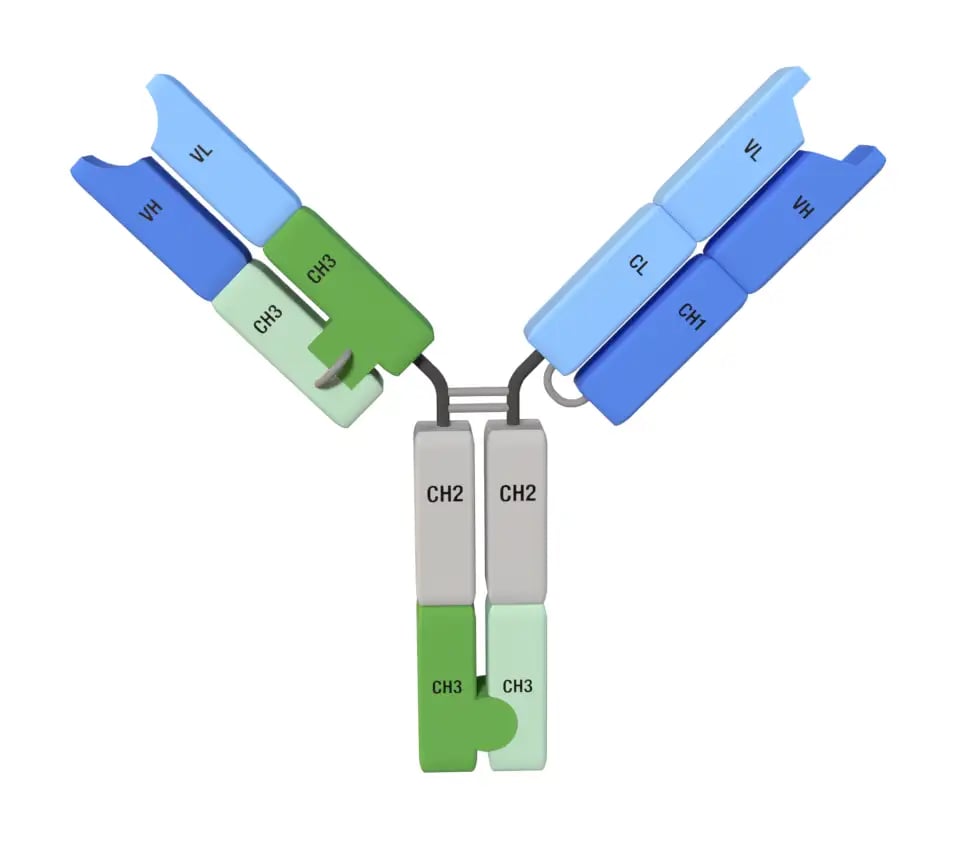
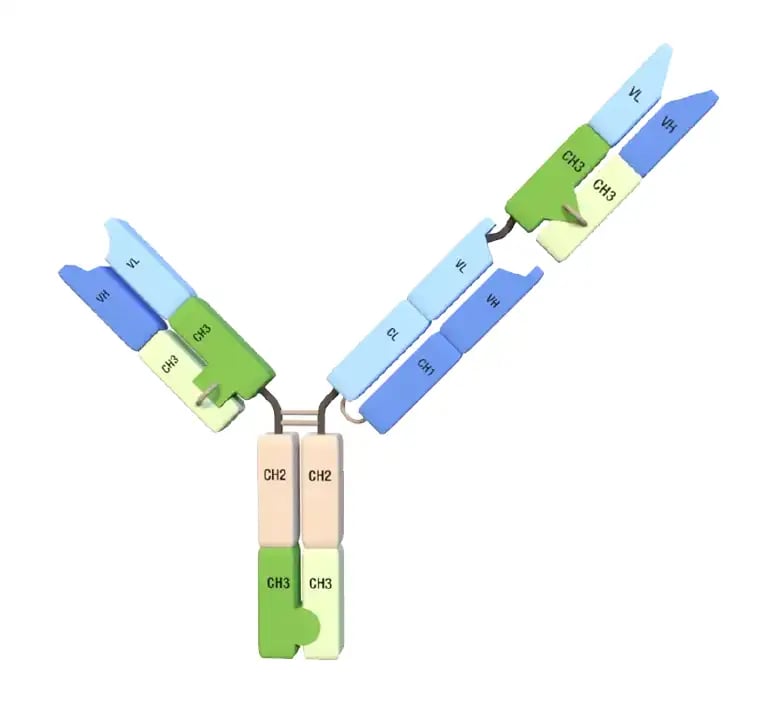
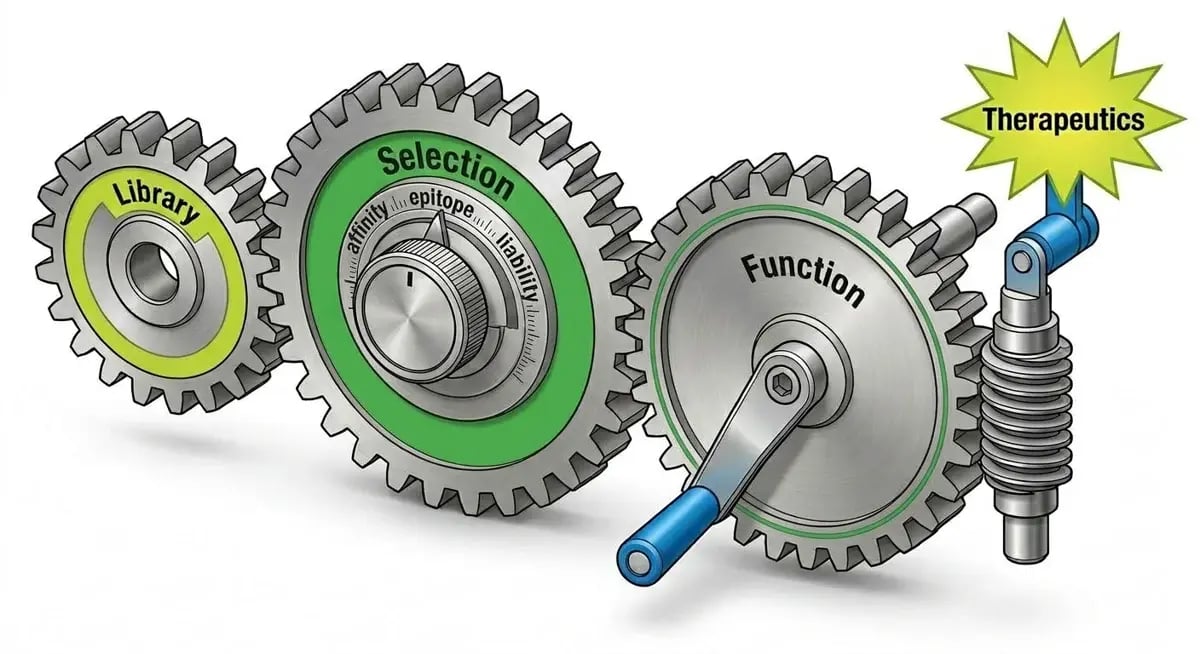
Invenra has established a robust and proven monoclonal antibody discovery engine focused on individual project requirements. Drawing on our experience delivering therapeutic-quality antibodies to partners in immunology and oncology, we refined and streamlined our selection and screening campaigns to meet the most critical performance metrics: affinity, diversity, developability, and function. Discovered sequences are well-suited to enter our B-Body® and T-Body™ multispecific antibody platforms for final format candidate assessments.
This paper presents unfiltered metrics from recent projects completed through the Invenra discovery pipeline, offering a clear view of the engine’s performance across key discovery outcomes.
Selections Suited to Project Success
With decades of experience developing multispecific antibodies, we perfected optimization of affinity, epitope specificity, developability, and pharmacokinetics. Our library and selection methodologies align to generate a diverse binder set specific to the project goals. By exploring affinity and epitope space, we develop multispecific therapeutics with the desired emergent properties, including AND-gate logic for improved tumor specificity or the regulation of signaling pathways as well as immunomodulation.
Each Invenra project generates dozens to hundreds of binders in the affinity ranges optimal to assess function, including sub-nanomolar affinities (KD < 1 nM) to 50% of targets and 85% or programs with binders in the single-digit nM (<10 nM) range. These data are from single selection campaigns directly from phage display library output. The number of high-quality binders and epitope diversity coverage rivals what can be obtained from immunized animal sources. However, results are available in weeks not months.
For projects requiring finely tuned binder features, Invenra a a yeast display module to the workflow (Figure 1). The power of sorting individual yeast cells based on the desired properties results in a highly enriched binder set for the feature of interest, whether it is steering toward a certain epitope, affinity, or biological/conditional function.
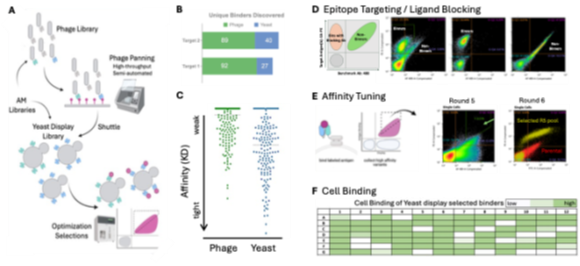
Figure 1. Selection strategy and outcome with an added yeast surface display (YSD) module added. A. Workflow starting with phage display to enrich the naïve library for target binders before reformatting and enrichment through YSD. B. Fewer binders coming through YSD, compared to phage display, but those binders are highly enriched for the feature of interest, an example of which is illustrated in panel C: Affinity profile of a binder panel, where each point represents a unique sequence. D Representative YSD sorting data steering selection toward a specific epitope using a blocking strategy. E Affinity tuning sorts, where gate is highly selective for tightest affinity binders. F Cell binding outcome from a YSD selection that used cell-panning with cancer cells to enrich yeast that functionally bind cells.
Germline Diversity Unlocks Epitope Coverage
The Invenra phage libraries present a variety of germlines across both heavy and light chain families, with parallelized selection strategies that give each germline equal opportunity to enrich based on functional superiority. The strategically selected germline frameworks convey diverse paratope architecture. It can access a correspondingly diverse set of epitopes, the currency of therapeutic antibody discovery [4][5]. Data from recent projects demonstrate target-specific germline enrichment patterns. For example, Cancer Target 3 selections favored IGHV1-46, Cancer Target 13 enriched IGHV1-69, while immune targets 1 and 2 recruited IGHV family 3 germlines (see Figure 2). Germline/target preferences emerge across projects for both heavy and light chains and illustrate the advantage of the Invenra library: multiple shots on goal. Discovery teams routinely advance hundreds of unique clones per target to functional screening, each exploring distinct epitopes and binding modes. Complex applications like bispecific AND-gate logic or biparatopics require testing a range of affinities (picomolar to low nanomolar) and diverse epitopes to avoid on-target toxicity in normal tissues. The Invenra Discovery Engine is an ideal solution for these applications.
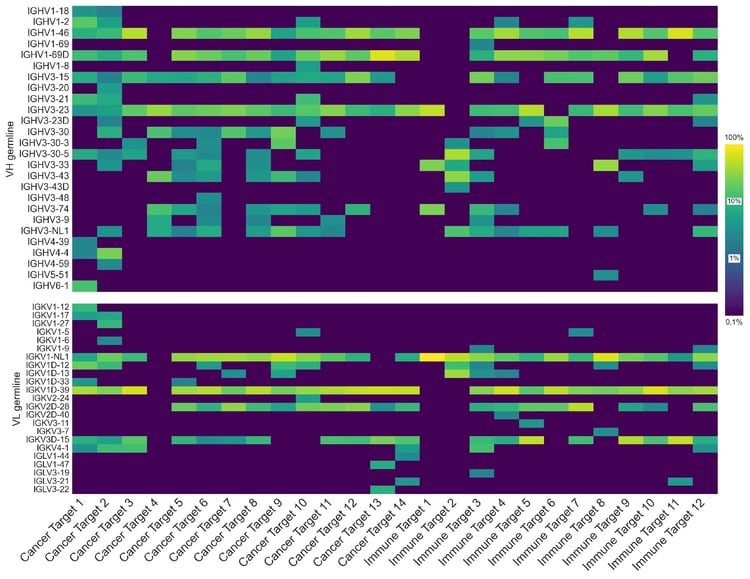
Figure 2. Heavy and light chain germline diversity discovered per target. Annotated discovered sequences and identified germlines using PipeBio, an antibody-focused bioinformatics platform.
Designed-In Developability: Clinical-Grade Sequences by Default
Therapeutic antibody failure often occurs late—during developability assessment or clinical trials—when sequence liabilities trigger immunogenicity, aggregation, or manufacturing challenges. Invenra eliminates this risk at the source through liability-limiting library design. Every CDR, including the notoriously variable CDRH3, is engineered to minimize known liability motifs (deamidation sites, unpaired cysteines, isomerization-prone sequences, etc.). The platform requires little-to-no candidate sequence filtering or tuning.
Antibodies identified in Invenra discovery campaigns show liability profiles indistinguishable from approved clinical antibodies, building confidence in the later-stage candidacy of the diverse binder pools generated by the platform.
The analysis includes liability scores for all sequences found through the selection process, not just those cherry-picked from top performers, providing a representative view of developability across the full discovery output (Figure 3).
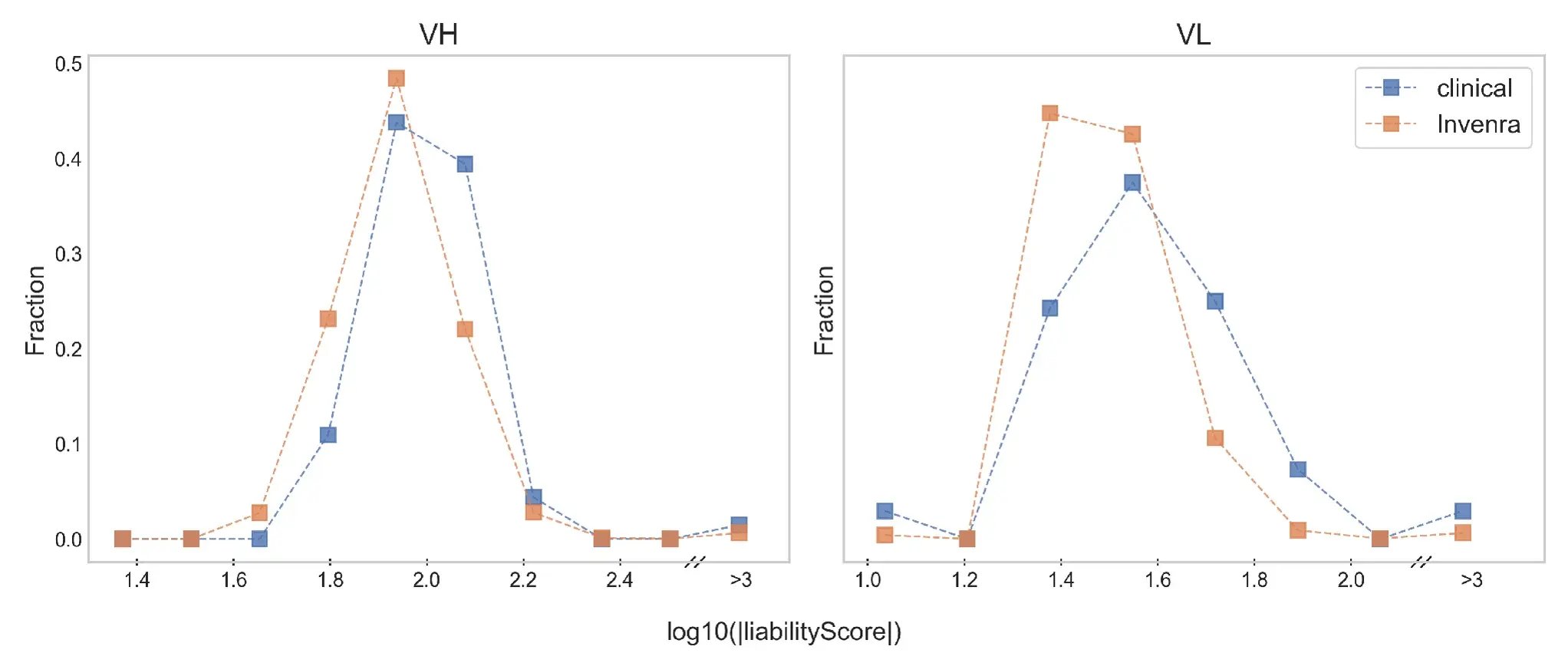
Figure 3. Distribution of liabilities discovered from the Invenra library (gold) versus antibody therapeutics in the clinic (blue). Sequences were scored dependent on the severity of the liability using PipeBio (www.pipebio.com).
Importantly, Invenra libraries are built entirely on human germline frameworks with CDR diversity constrained to naturally occurring patterns within those frameworks. Humanness analysis using HuMatch [6] confirms that binders from the library score better than clinical-stage antibodies for human identity, dramatically reducing the risk of anti-drug antibodies (ADAs) in patients (see Table 1). In contrast, mouse-derived antibodies require humanization—a process that risks affinity loss and introduces immunogenicity risk. The Invenra human germline framework eliminates this entirely [7].
| Source | % Human VH (>0.95) | % Human VL (>0.95) |
| Invenra | 90% | 96% |
| Clinical | 75% | 58% |
Table 1. Humanness scoring of antibody sequences discovered from the Invenra library versus sequences of clinical antibodies. Scoring was performed using HuMatch [6].
Function First: Integrating Cell-Based Screening into Discovery
Affinity alone does not predict therapeutic success. The most critical—and historically most delayed—readout is functional activity in disease-relevant cellular models. Invenra reduces project timelines by integrating functional assessment directly into early discovery.
Dedicated cell biology and immunology teams design project-specific assays: target binding on cancer cell lines, pathway activation/blockade in reporter systems, or even rapid progression to in vivo mouse efficacy models. By moving these powerful assays upstream, Invenra creates a highly effective purpose-built functional screening filter. The data demonstrate a diverse set of target-specific success profiles, underscoring the value-add in this early functional screen. Normalized activity signals consistently identify numerous lead candidates (see Figure 4).
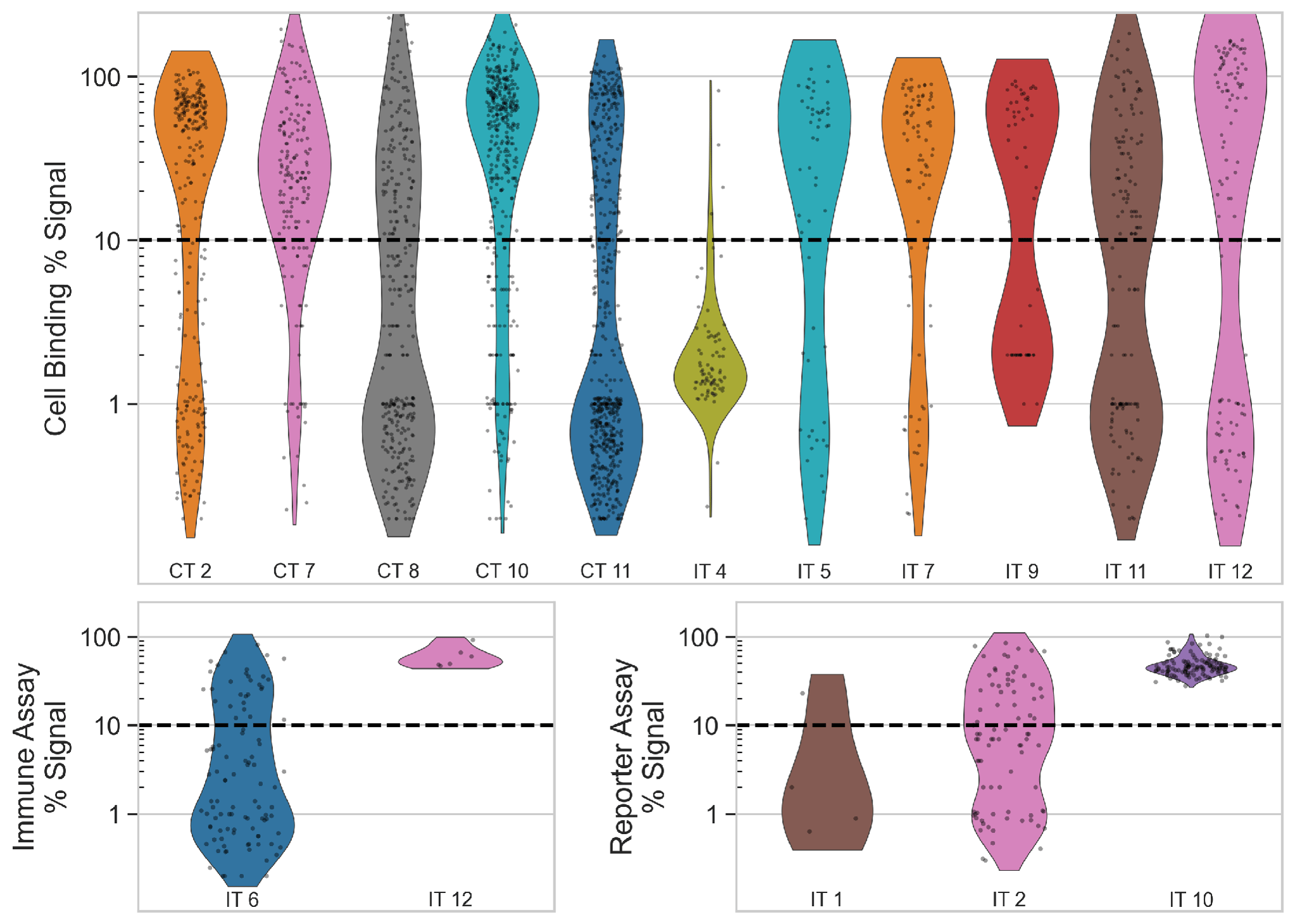
Figure 4. Distribution of the binder’s project-specific functional activity. Cancer targets (CT) were tested for cell binding, while immune targets (IT) were assessed dependent on the project goals (cell binding, immune assay, or reporter assays). The data are normalized across assays using internal controls.
Complete Characterization Package Delivered in 8 Weeks
Contrast the Invenra integrated workflow with mouse immunization timelines:
| Milestone | Immunization Timeline | Invenra Timeline |
| Antigen preparation | Weeks 1-2 | Weeks 1-2 |
| Immunization (multiple boosts) | Weeks 3-9 | N/A |
| Serum titer testing | Week 10 | N/A |
| Selection | Weeks 11-12 | Weeks 3-4 |
| Sequence triage & expression | Weeks 13-14 | Weeks 4-5 |
| Affinity characterization | Weeks 15 | Week 6 |
| Functional screening | Weeks 16-17 | Weeks 6-7 |
| Lead identification | Week 18 | Week 8 |
| Humanization and Recharacterization (if using WT mice) | Weeks 18-26+ | N/A |
| Total Time | 5-7+ months | 8 weeks |
Table 2: Timeline comparison between mouse immunization and synthetic library discovery approaches
By Week 8, Invenra delivers a complete characterization package:
Up to 336 unique sequences characterized by a battery of high throughput assays:
-
Binding properties and kinetics measurements
-
Functional activity in disease-relevant cellular assays
-
Developability assessment (liabilities, humanness, surface properties, stability measurements and predictions)
-
Expression and purification data in mammalian systems
-
Sequences formatted for immediate multispecific engineering
This acceleration isn't incremental. It's transformational. Programs move from antigen to lead antibody selection in months.
Key Differentiators: Why the Invenra Platform Stands Apart
1. Naïve Library with Immunized-Library Performance
Most naïve libraries struggle to generate high-affinity binders, often requiring additional affinity maturation. The Invenra library architecture combines controlled diversity in CDRH3 with data science-driven variability in the remaining VH and VL CDR regions. With multiple germline sources that drop seamlessly into a parallelized, automated workflow, we have proven that naïve selections access paratope space necessary to deliver affinities and target diversity with more exquisite control than somatic hypermutation [8][9][10].
2. Multiple Function-Validated Therapeutic-Grade Antibodies in 8 Weeks
Unlike discovery platforms that prioritize binding and defer function to later stages, at Invenra cell biology and immunology teams are embedded in the discovery workflow. Functional assays are designed in parallel with selections, ensuring that every lead candidate demonstrates project-relevant biological activity before characterization resources are committed.
3. Seamless Multispecific Integration
Discovery output feeds directly into the company's proprietary B-Body® and T-Body™ multispecific platforms. Variable domains discovered from naïve selections require no optimization for heterodimeric assembly—the constant domain architecture drives chain pairing automatically. This plug-and-play modularity eliminates the format-specific reengineering that plagues traditional multispecific programs.
4. Full-Service Workflow: Antigen to Candidate
Invenra controls the entire value chain: upstream antigen design and production all the way through discovery, functional assays and ultimately downstream scale ups and in vivo studies. This end-to-end integration eliminates handoff delays and ensures every stage is optimized for the project goal. Clients receive leads ready for preclinical development, not raw sequences requiring further characterization and optimization.
5. Continuous Improvement
The library and workflow are not static, they evolve. Insights from dozens of completed projects inform our library design. Which germline combinations deliver the best developability profiles? Which CDR3 design strategies maximize functional hit rates? This continuous improvement loop, powered by machine learning on proprietary selection data, ensures the platform does not stand still, using real data generated from real project success criteria to drive innovation.
Conclusion: The Future of Antibody Discovery is Synthetic, Functional, and Fast
If speed and biological function are paramount for your program, consider the Invenra Rapid Discovery Engine. The validated discovery engine delivers:
-
Speed: 8 weeks to characterized leads
-
Quality: Down to sub-nM affinities, clinical grade developability
-
Diversity: Hundreds of unique binders per target, exploring diverse epitopes
-
Function: Cell-based screening integrated into discovery, not deferred to development
-
Integration: Seamless progression from discovery to multispecific assembly to preclinical development
For therapeutic programs where time to clinic is measured in competitive advantage and patient lives, the Invenra synthetic discovery platform represents the leading edge of the post-immunization era of antibody therapeutics.
About Invenra
Invenra Inc. is a biotechnology company based in Madison, Wisconsin, specializing in rapid antibody discovery and multispecific therapeutic development. The company's integrated platform combines synthetic library technology, functional screening capabilities, and proprietary B-Body® bispecific and T-Body™ trispecific assembly platforms. Invenra partners with pharmaceutical and biotech companies globally to accelerate antibody programs from target validation to clinical candidate selection.
For more information, visit www.invenra.com | bd@invenra.com
Follow us on LinkedIn at linkedin.com/company/invenra.
References
[1] Köhler, G., & Milstein, C. (1975). Continuous cultures of fused cells secreting antibody of predefined specificity. Nature, 256(5517), 495-497.
[2] Alfaleh, M. A., et al. (2020). Phage display derived monoclonal antibodies: From bench to bedside. Frontiers in Immunology, 11, 1986.
[3] Bertoglio, F., et al. (2021). A pandemic-enabled comparison of discovery platforms demonstrates a naïve antibody library can match the best immune sources. Nature Communications, 12, 1042.
[4] Shrock, E., et al. (2023). Germline-encoded amino acid-binding motifs drive immunodominant public antibody responses. Science, 380(6640), eadc9498.
[5] Briney, B., et al. (2012). Commonality despite exceptional diversity in the baseline human antibody repertoire. Nature, 566(7744), 393-397.
[6] Chinery, L., Jeliazkov, J. R., & Deane, C. M. (2024). HuMatch: fast, gene-specific joint humanisation of antibody heavy and light chains. mAbs, 16(1), 2434121.
[7] Gao, S. H., et al. (2013). Hybridoma technology revisited: Current status and future perspectives. Acta Pharmacologica Sinica, 34(10), 1273-1279.[8] Frenzel, A., et al. (2016). Phage display-derived human antibodies in clinical development and therapy. mAbs, 8(7), 1177-1194.
[9] Kügler, J., et al. (2015). Generation and analysis of the improved human HAL9/10 antibody phage display libraries. BMC Biotechnology, 15, 10.
[10] Xu, J. L., & Davis, M. M. (2000). Diversity in the CDR3 region of VH is sufficient for most antibody specificities. Immunity, 13(1), 37-45.