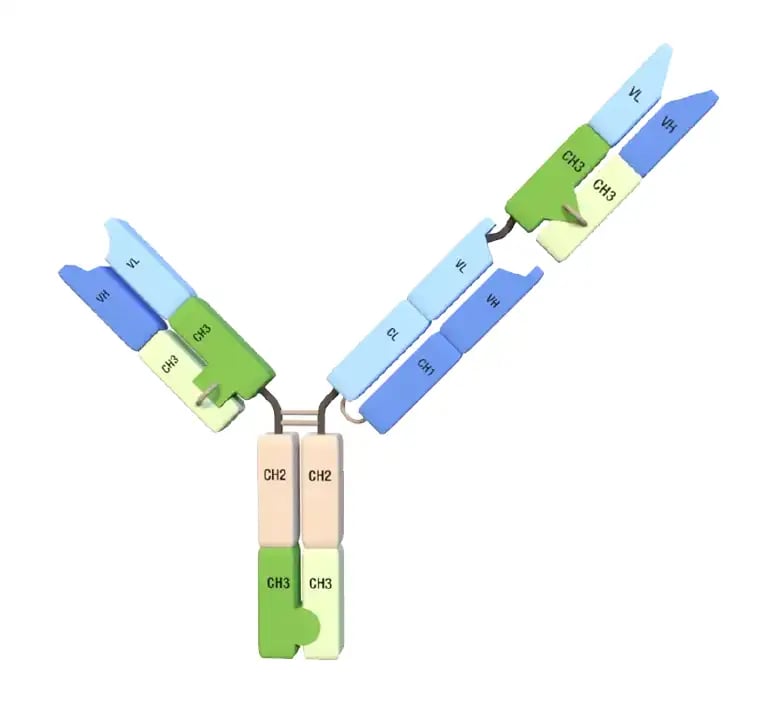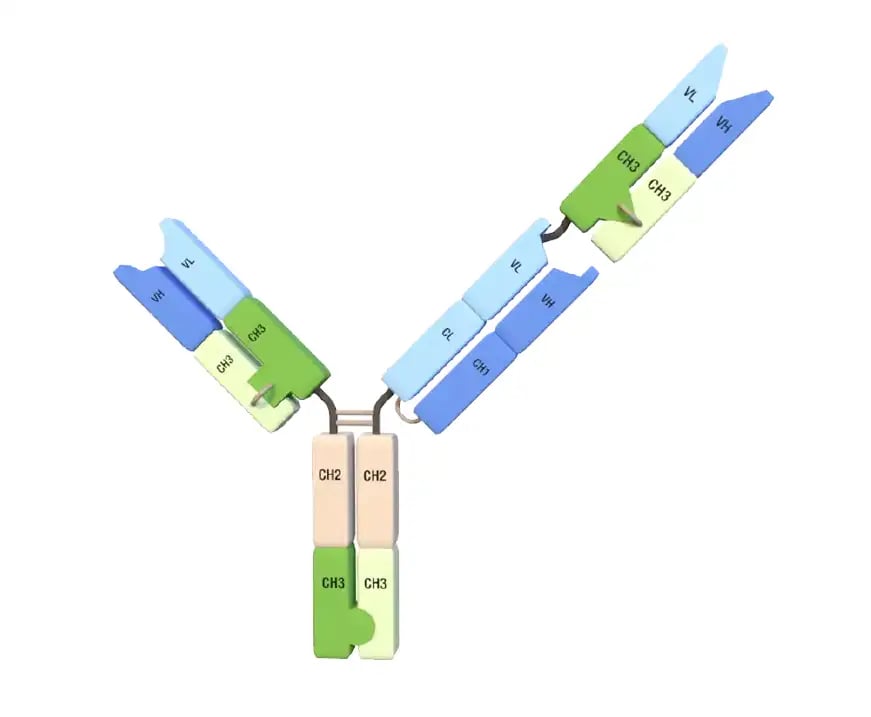
At a glance
-
A single-target ADC treats a tumor as if every cell within it were identical. Tumors can be heterogeneous. That means tumor cells lacking the target can survive single-target treatment and regrow.
-
A third binding arm buys you more than coverage. It can broaden the patient population, close off escape routes, reduce side effects, and alter how much payload actually enters the cell.
Adding targets doesn't appear to add toxicity. The payload usually sets the maximum tolerated dose, not the number of antigens, and bispecific ADCs in the clinic have shown class-consistent safety rather than new toxicities. -
Not every program needs three arms. If a bispecific already reaches the patients you're trying to reach, the added complexity has to earn its place. We build both and compare them directly.
-
Invenra is developing 52 trispecific ADC programs across four mechanisms of action, each one is fully tested before it gets added to our deck.
An ADC is a targeted drug delivery system. You attach a potent cytotoxic payload to an antibody; the antibody finds a tumor antigen; the therapy gets pulled inside the cell, and the payload does its work where it's supposed to rather than everywhere at once.
The approach works, but it also has a structural weakness that becomes more obvious the longer time goes on: most ADCs recognize a single antigen, and tumors are not uniform.
Within a single tumor, some cells express the target at high levels, some at low levels, and some not at all. A one-target ADC treats that variation as though it doesn't exist. The cells that don't carry the antigen survive, and they're the ones that come back.
Bispecific ADCs were the first real answer, and several are now producing encouraging clinical data. Here, we shed light on the next innovation — trispecific antibodies — and when it’s worth evaluating.
What a third arm actually does
The intuitive answer is breadth, and that part is true. Adding a third tumor antigen can expand the proportion of patients likely to respond within an indication and broaden the range of cancer types in which the molecule has a target.
It also guards against escape. When a tumor evolves and downregulates or sheds a target, a molecule with three arms still has something left to bind.
But breadth is only the surface of it. Three arms give you options in how you use them.
You can choose your logic
With three binding arms, you can build what amounts to “OR” logic, where binding any one of the three targets is enough to engage. That gives you the widest possible reach.
Or you can build “AND” logic, where the molecule only fully engages cells carrying two particular targets together. That narrows what the ADC acts on, which is a way to protect healthy tissue that happens to express one of your antigens.
You can also combine the two. As we'll come to, one of the more interesting mechanisms we're working on can effectively switch a molecule from “AND” behavior to “OR” behavior depending on where it is in the body.
You can fix internalization
This is the one that gets underappreciated. Binding a tumor antigen is necessary but not sufficient for an ADC. The complex must be pulled into the cell for the payload to be released. Plenty of targets, depending on which epitope you hit, internalize poorly.
Internalization is largely driven by clustering at the cell surface. A biparatopic antibody, meaning two arms that bind two different epitopes on the same target, creates daisy chains between adjacent target molecules and produces dense clusters, which substantially changes the internalization profile. That approach is already well established in bispecific ADCs.
Now, what a third arm adds. With a bispecific, going biparatopic costs you both arms; you've spent your whole molecule on internalization. With a trispecific, you keep the biparatopic pair and still have an arm left for breadth, escape prevention, or an entirely different mechanism.
You take a proven approach and put differentiation on top of it.
Why trispecific antibodies for ADCs?
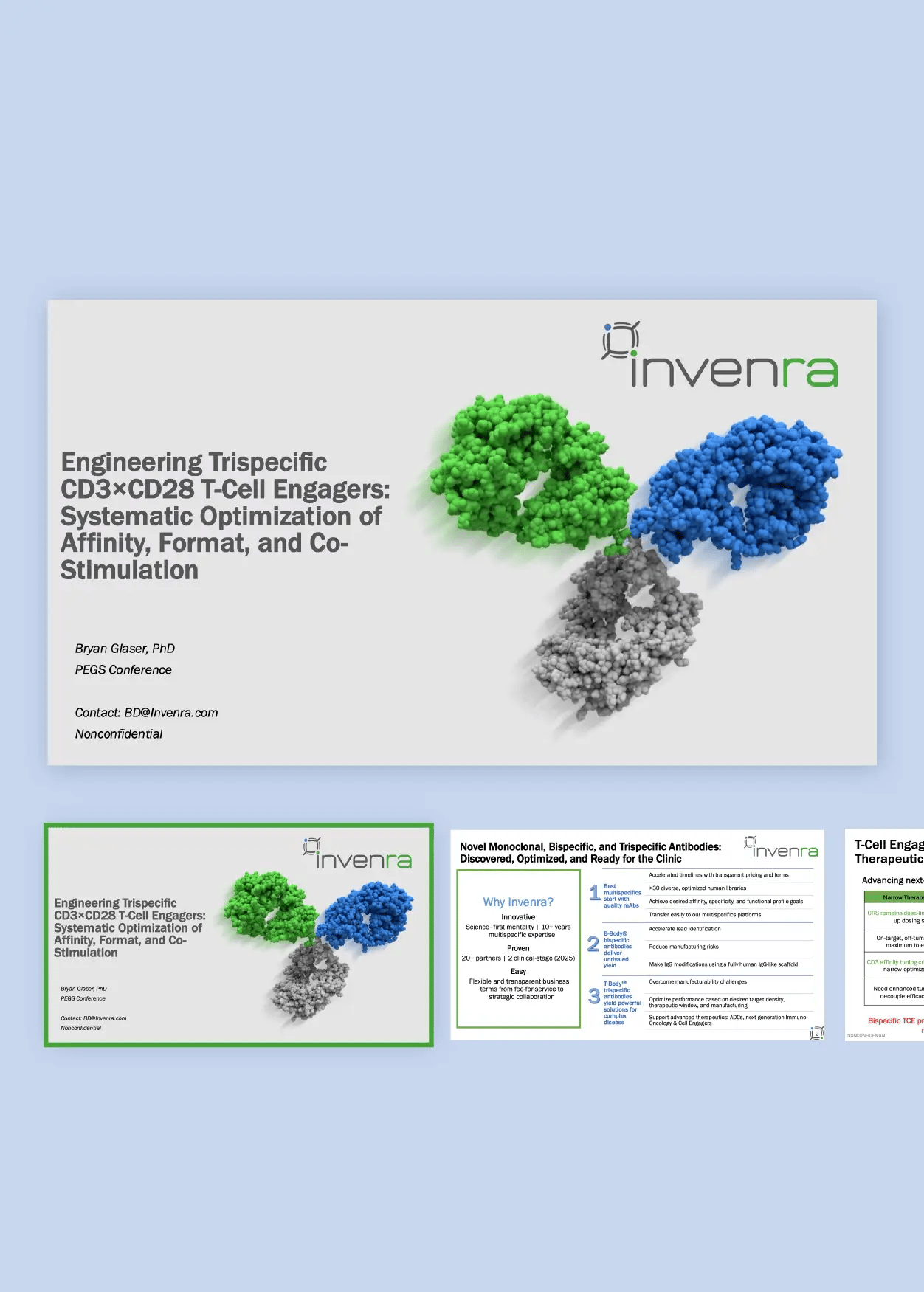
Here’s what it boils down to, taken from what we presented at the recent PEGS conference.
| Trispecific Advantage | Why? |
| Broader patient coverage within a cancer type | Targeting multiple targets increases the number of patients who are likely to respond in an indication |
| More cancer types covered | Targeting multiple targets increases the number of cancers that are likely to respond |
| Better tumor control | Targeting multiple targets limits the tumors' escape routes and attacks a larger portion of a heterogenous tumor |
| More mechanisms of action available | These include VEGF Activated Avidity Lock (VAAL), Biparatopic Plus, and Stroma & Tumor |
Does a third target mean more toxicity?
The evidence so far says the payload usually drives the toxicity ceiling, not the number of antigens you're targeting.
An FDA analysis of eight vc-MMAE ADCs directed at entirely different antigens found that they all reached Phase II at a similar dose range of roughly 1.8 to 2.4 mg/kg. The antigen wasn't what set the maximum tolerated dose. The payload class was.
Clinical bispecific ADCs point in the same direction.
Izalontamab brengitecan, an EGFR × HER3 ADC with a topoisomerase-1 inhibitor payload, reached a recommended Phase II dose of 2.5 mg/kg with hematologic toxicities consistent with monospecific ADCs carrying the same payload class and received FDA Breakthrough Therapy Designation in August 2025.
JSKN016, a TROP2 × HER3 ADC, showed a manageable and predictable Phase I safety profile with class-consistent toxicities. Neither produced qualitatively new toxicity from the multi-targeting format itself.
That's a large part of the foundation the trispecific case rests on. If adding a second target didn't add toxicity, there's reason to expect a third arm can capture more tumor heterogeneity without a corresponding safety penalty. It isn't proof, but the direction of the clinical evidence matters.
You can find more on this on slides 20 and 21 of our PEGS presentation.
Four ways to spend the third arm
When we started designing trispecific ADCs, we organized the work around four mechanisms where a third arm could plausibly deliver something a bispecific can't. Those four became the structure for our forthcoming 52-program card deck initiative, and they're a useful way to think about the design space, so let me break it down.
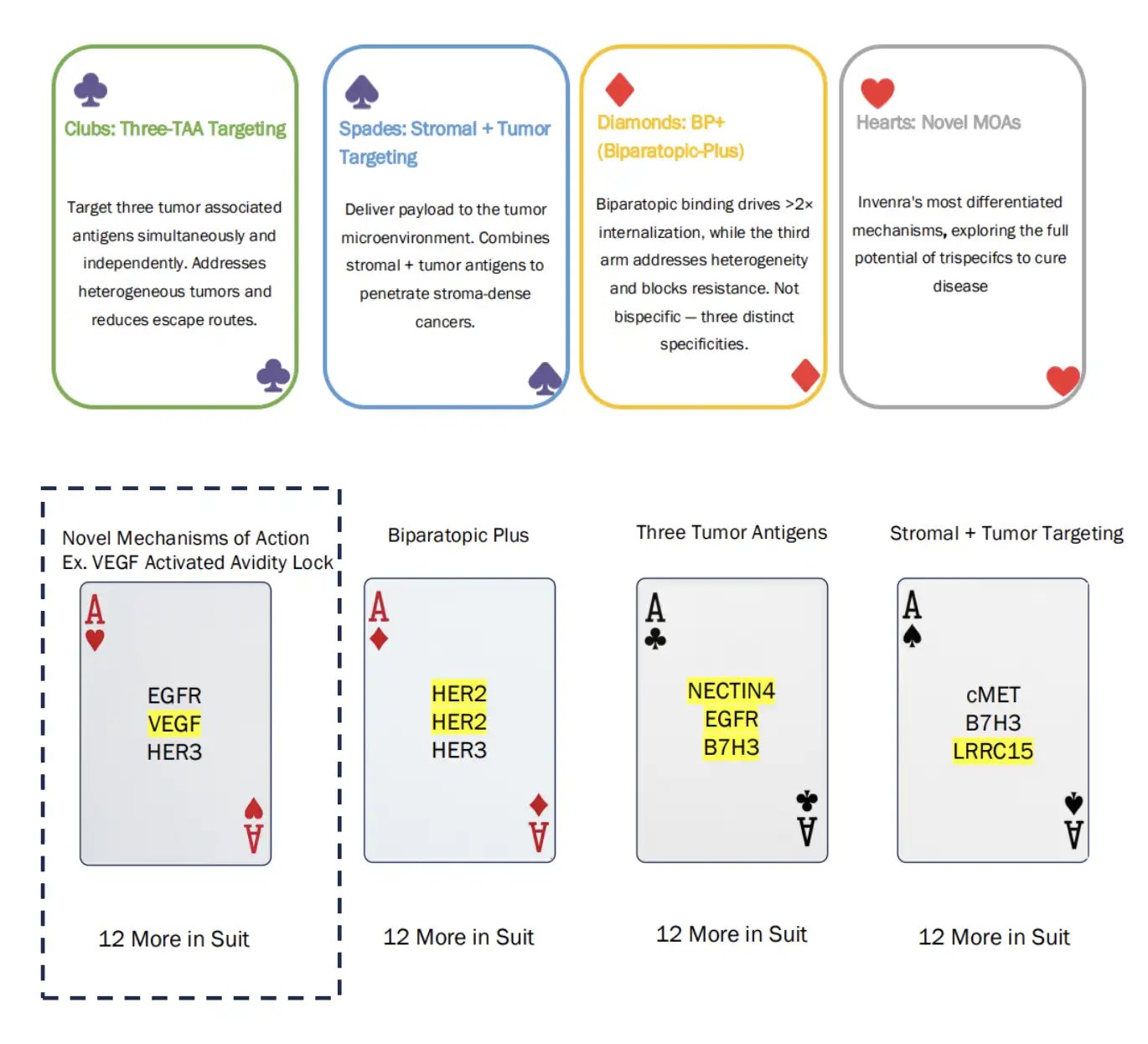
52 programs, four mechanisms, one deck. Invenra is developing 52 T-Body ADCs programs across four strategic approaches to overcome resistance and improve tumor selectivity. Four suits with the example target combinations under each.
A closer look at the VEGF-activated avidity lock
Most ADC targets have a problem: they're also expressed on healthy tissue.
-
EGFR shows up in the skin, GI tract, liver, and kidney. TROP-2 in kidney, lung, liver, and GI epithelium.
-
HER3 in skin, GI tract, and reproductive tissues.
-
B7-H3 is broadly expressed across many normal tissues.
That's why on-target, off-tumor toxicity is a recurring problem in the field, and why EGFR-directed therapies in particular are known for severe skin toxicity.
The usual way out is to lower the affinity of your binding arm so it doesn't engage healthy tissue. The trouble is that a weak arm doesn't engage the tumor well either.
VEGF offers a way around that, and it works because of two facts about the molecule. First, VEGF is an obligate homodimer, meaning it exists as an identical pair, so one VEGF can bridge two antibodies. Second, it's often heavily overexpressed in the tumor microenvironment relative to systemic circulation.
Put those together and you can build a conditional switch. You deliberately make the tumor-antigen arms weak binders.
-
Outside the tumor, in tissue where VEGF is low, those weak arms interact briefly with healthy cells expressing the antigen but never reach the density needed to matter. Minimal off-tumor binding.
-
Inside the tumor microenvironment, where VEGF is abundant, the VEGF homodimer bridges two of your molecules and pulls them together. That clustering creates avidity, which is the total binding strength of the molecule as opposed to the affinity of any single arm. Suddenly the same weak arms are engaging strongly, and the clustering also triggers internalization, which is exactly what an ADC needs.
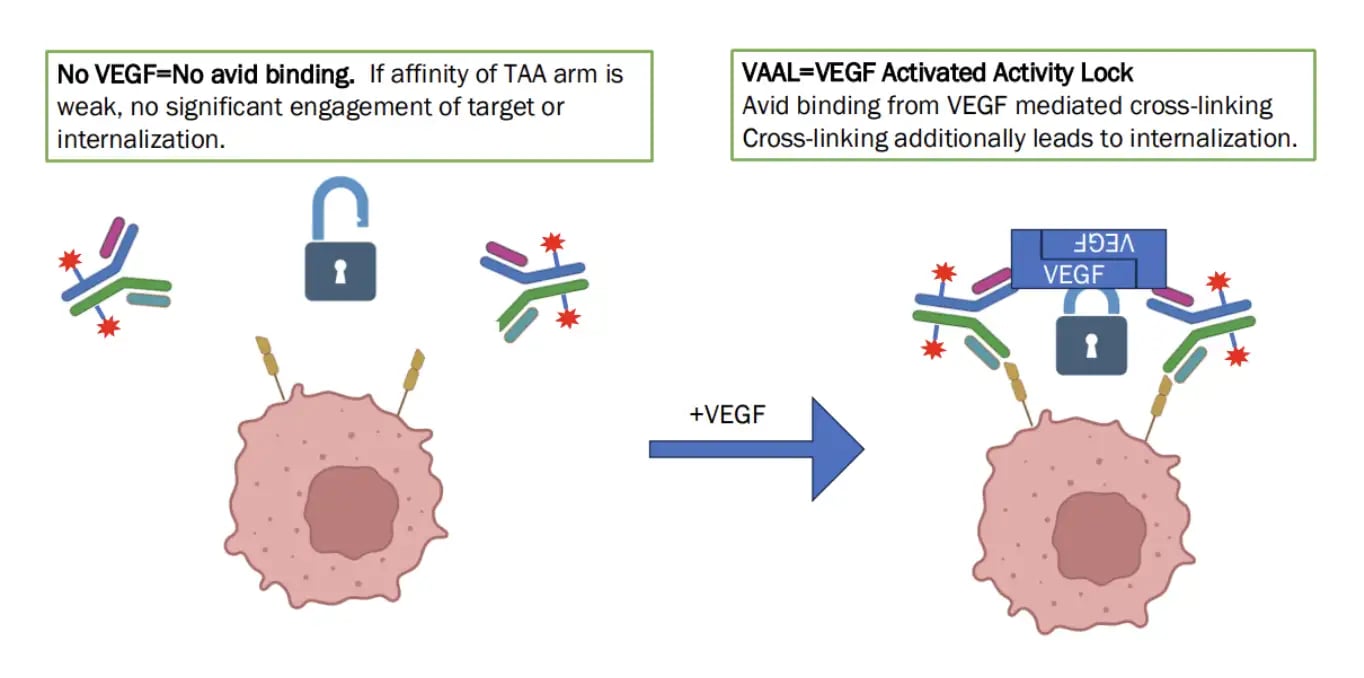
VAAL, the VEGF Activated Avidity Lock
The practical framing we use is that it makes “dirty” targets “clean.” It lets you use a low-affinity antibody against a target you couldn't otherwise safely address, and have it behave like a high-affinity one only where the tumor is.
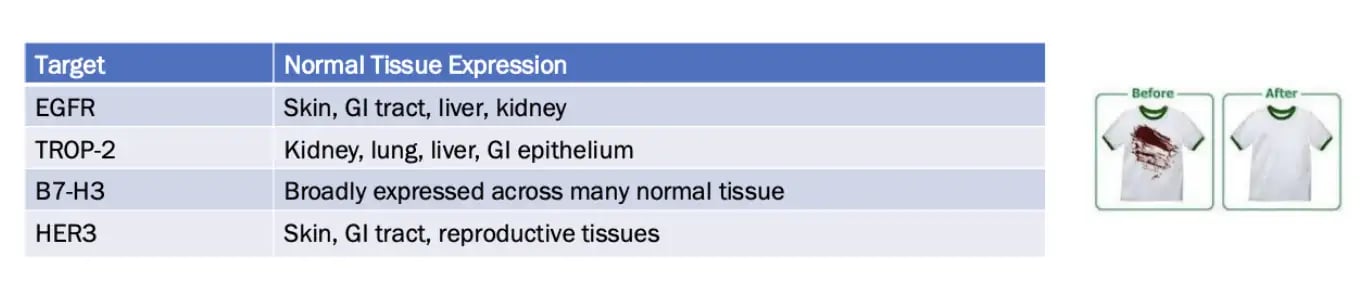
Most ADC targets exhibit some degree of normal tissue expression. VEGF provides an avidity binding enhancement for bsAbs or tsAbs. Lower-affinity Abs to the TAA can be used to reduce normal tissue binding in locations where VEGF is not present.
Our data support the mechanism. Using A549 tumor cells expressing roughly 52,000 copies of EGFR per cell, an EGFR × VEGF bispecific with a low-affinity EGFR arm showed little engagement in the absence of VEGF. Add VEGF and you see strong binding and clear internalization, along with a large differential in killing in a piggyback ADC assay.
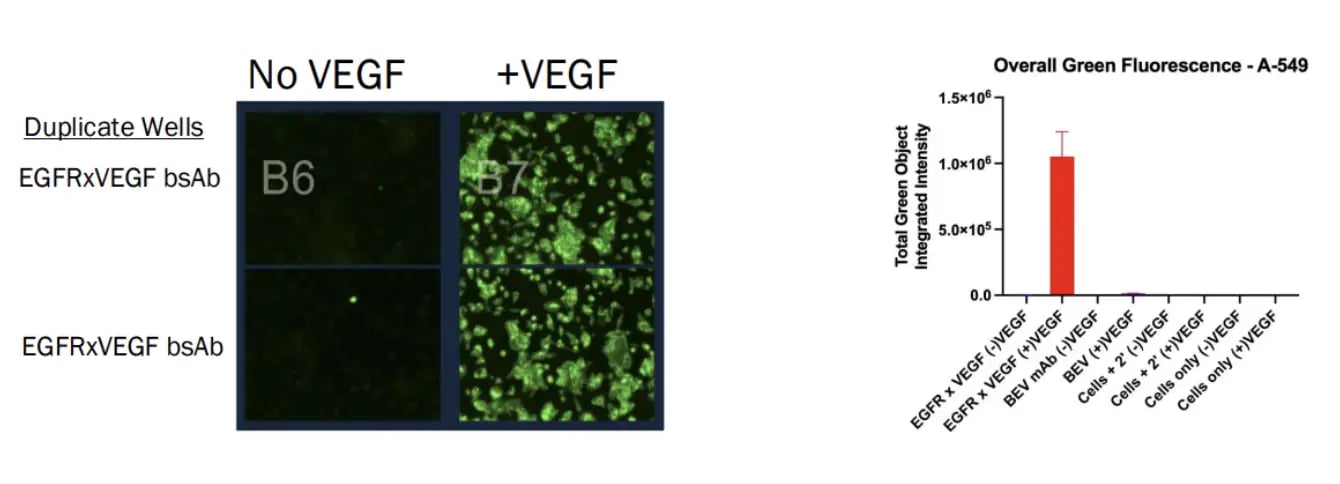
The A549 binding and internalization data
There's supporting evidence from outside our walls too. Our PEGS presentation shows that PD-1 × VEGF bispecifics have produced notable clinical results and substantial partnering activity, and that VEGF-driven avidity is one of the hypothesized mechanisms behind these results.
The caveat here is that this works well in vitro, and the open question is how strongly it translates in vivo. Is there enough VEGF in a real tumor to drive the effect at the level we see in a dish?
The clinical results from PD-1 × VEGF programs suggest there should be, but we're not going to overstate it before we have the in vivo data. (Follow us on LinkedIn for the latest updates on our progress) It's also worth noting that VEGF isn't the only obligate homodimer with tissue-selective expression, so the same principle could extend to other switches.
What the data shows
Two bodies of work sit behind this.
1. The discovery screen showed trispecifics killed more broadly
This multispecific ADC story is straight from what we presented at World ADC. Pop open the deck and follow along with the short version of the story below.
We built a 12×12 matrix of bispecific ADCs from six targets with two binding arms each, including biparatopics and one-armed controls, and screened every molecule for killing across three breast cancer profiles: HER2-high, HER2-low, and triple-negative.
Cytotoxicity was measured with a piggyback MMAE assay and scored alongside developability from the same plate data. The best-performing pairs were then rebuilt as trispecifics and compared head-to-head. The trispecifics killed more broadly and more potently than the bispecifics.
That matrix approach is worth a note because there's more than one way to run it. We explored combinations across six different targets to find pairs that work well together. The other version, which some partners come to us with, is to bring two targets and ask for twelve antibodies against each, then screen those combinations. That second design is especially useful for optimizing the biparatopic side.
2. Biparatopic increased internalization
From our recent PEGS talk:
For Biparatopic Plus, we measured the internalization rate for a HER2 × HER2 × HER3 trispecific across breast and gastric lines spanning a wide range of receptor density, from roughly 250,000 HER2 copies per cell down to 18,000, with HER3 varying independently. The biparatopic arrangement increased internalization, and the piggyback ADC killing data followed.
We've also run a T-Body trispecific ADC for breast cancer against benchmark comparators, conjugated at a drug-to-antibody ratio of 5.56 with 95% monomer.
Underneath all of it, the platform itself has to hold up, because none of this matters if the molecules are hard to make! T-Body trispecifics have been expressed at up to 1500 µg/mL transiently, can reach better than 90% purity in a single step, run on standard Protein A and ion exchange, support both kappa and lambda light chains, and show normal IgG-like pharmacokinetics in rats with a half-life of 6.6 days.
When two targets are enough
Not every program needs three arms. The question is always whether the added complexity buys you something you actually need.
A useful way to frame it is to suppose you're trying to cover three indications, and a well-chosen bispecific reaches 90% of the patients across them, while a trispecific gets you to 96%.
Is that six points worth the extra complexity? Sometimes clearly, yes. Sometimes, no. It depends on the indication, the competitive situation, and what you're willing to carry.
Potency shifts raise the same question. If a trispecific gives you a tenfold potency improvement, is that enough on its own? In ADCs, it might well be, because dosing matters so much. But it has to be argued with an expert read of the data in the context of your target, not assumed.
The hardest thing to quantify is escape. A trispecific and a bispecific can look roughly equivalent in a standard assay, and then diverge sharply once a tumor sheds one antigen, because the bispecific has far less to fall back on. That advantage is real but it doesn't show up unless you design an experiment that can see it.
Which leads to the point we most want a prospective partner to understand. The most challenging part of deciding between a bispecific and a trispecific is selecting the appropriate assays and controls for comparison. Pick the wrong ones and you'll either miss a genuine advantage or credit one that isn't there.
That's a big part of why we build monoclonals, bispecifics, and trispecifics on the same architecture and run them in the same campaign — so the comparison is fair, and so the simplest molecule that does the job is the one that wins.
52 Views of Cancer
Our initiative, 52 Views of Cancer, started as a way to organize our own thinking. We wanted a structure for the question of where a trispecific ADC could deliver something a bispecific couldn't, and the four mechanisms listed previously became that structure.

The number came from a deck of cards: four suits, around thirteen programs each. It’s a one-of-a-kind playing card deck that celebrates the creativity, resilience, and spirit of people whose lives have been touched by cancer.
Each card in this deck will feature original artwork by a different cancer patient, survivor, or immediate family member, making every card a unique view of the human experience with this disease. A corresponding website offers an inspiring and poignant look at each artist’s story.
Target selection draws on the published literature, clinical trial outcomes, and conversations with academic groups and clinical experts.
How to engage with us for ADC projects
There are three ways to work with us on these programs.
-
For some, we take the molecule furthest ourselves. We select the linker and payload and generate an IND-enabling data package, including cell line development, toxicology, and PK. That suits groups who want an asset that's ready to move rather than a starting point.
-
We also offer pre-made ADCs with less data, allowing you to complete development prior to IND.
-
More often, partners bring their own linker-payload technology. Under a straightforward material transfer agreement, we provide material, you conjugate it with your own chemistry and generate your own package, and if the results are compelling, there's a path to licensing that molecule.
- If you like a target combination but want it adapted, or you like two of the three arms, we can do custom builds adjacent to the programs we've described.
In every case, a partner taking one of these forward gets exclusivity on that target combination for a defined period. We're not interested in building competing molecules against the same combination.
Talk to us
Working on an ADC and wondering whether a third arm would help? Tell us about the targets and the tumor setting, and we'll give you a straight read on the best path forward.
Contact us »
Or start with the data: The full PEGS presentation deck covers the VEGF-activated avidity lock, the internalization data, and the four mechanisms in more detail. View the presentation »
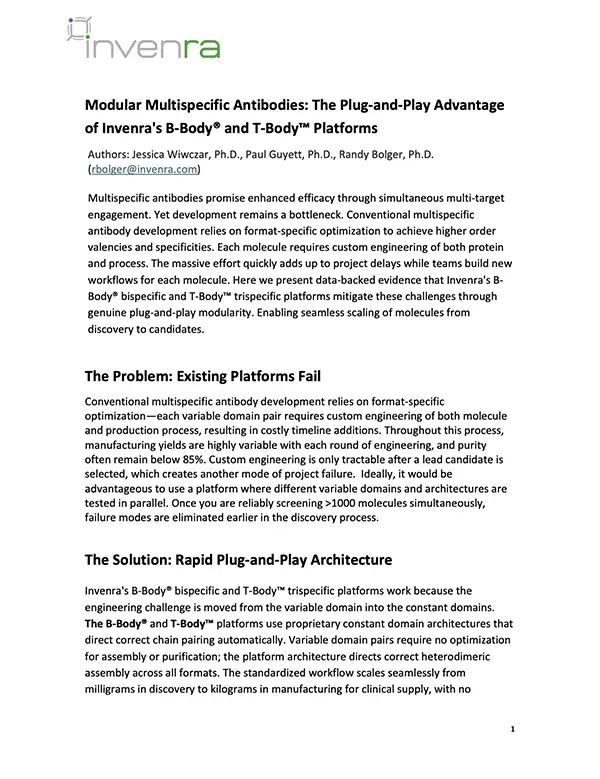 White paper
The Plug-and-Play Advantage of Invenra’s Multispecific Platforms
Invenra’s B-Body® and T-Body™ modular multispecific antibody platforms enable plug-and-play assembly and format-agnostic purification to deliver consistently high-purity bispecific and trispecific antibodies.