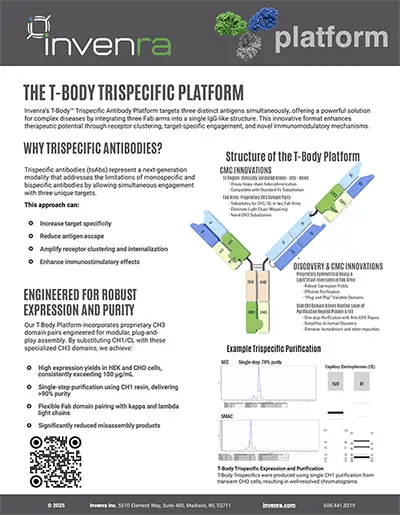
g/L from transient expression

Rapid Prototyping with Challenging Antibodies
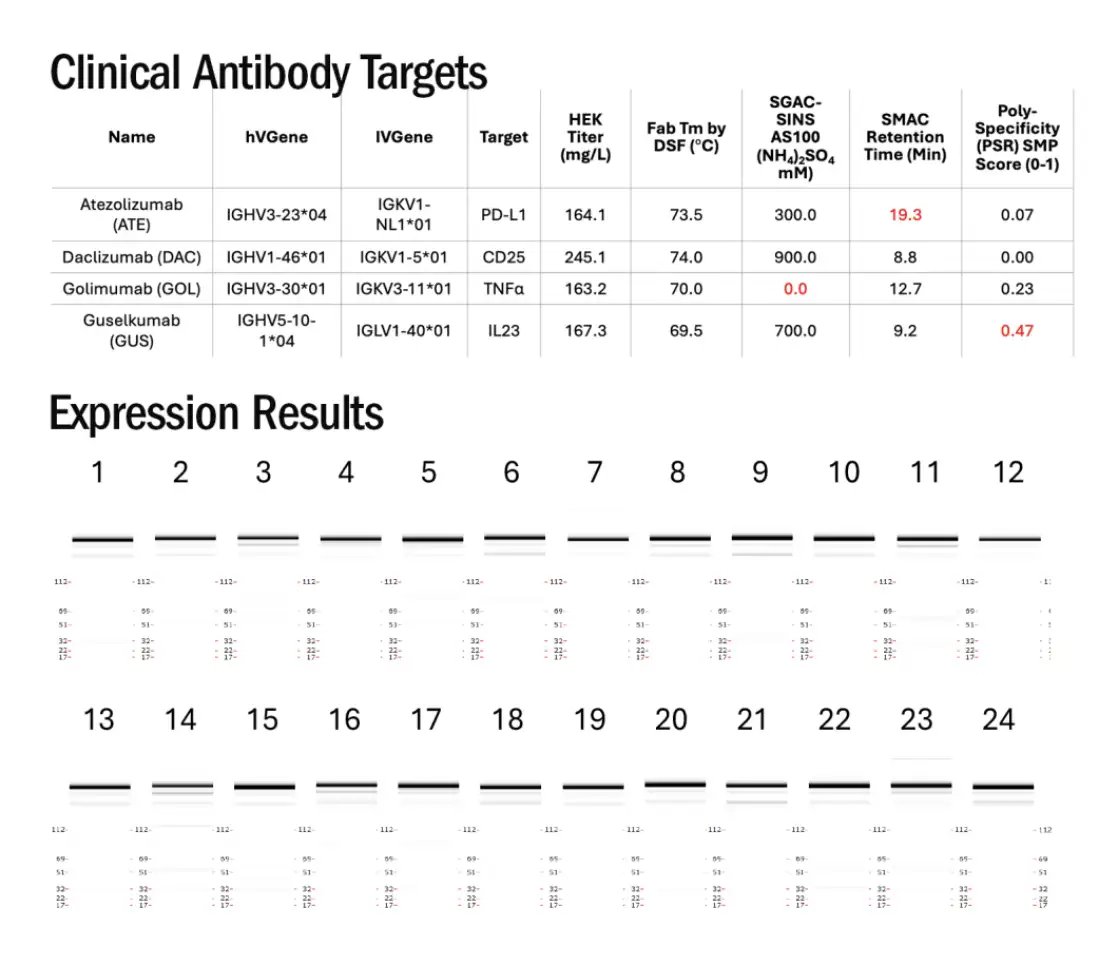
The platform was stress-tested with four clinical antibodies chosen for difficult developability (Jain et al., PNAS 2017), three kappa and one lambda. Every arrangement of their domains makes 24 different T-Bodies, and the platform handled the whole set.
- 4 challenging clinical antibodies: PD-L1, CD25, TNFα, IL23 (3 kappa, 1 lambda)
- All domain arrangements make 24 T-Bodies
- Expi-CHO expression, one-step CH1 purification
- 75–95% purity by non-reducing CE-SDS
Robust Expression & Purity
up to 1.5 g/L
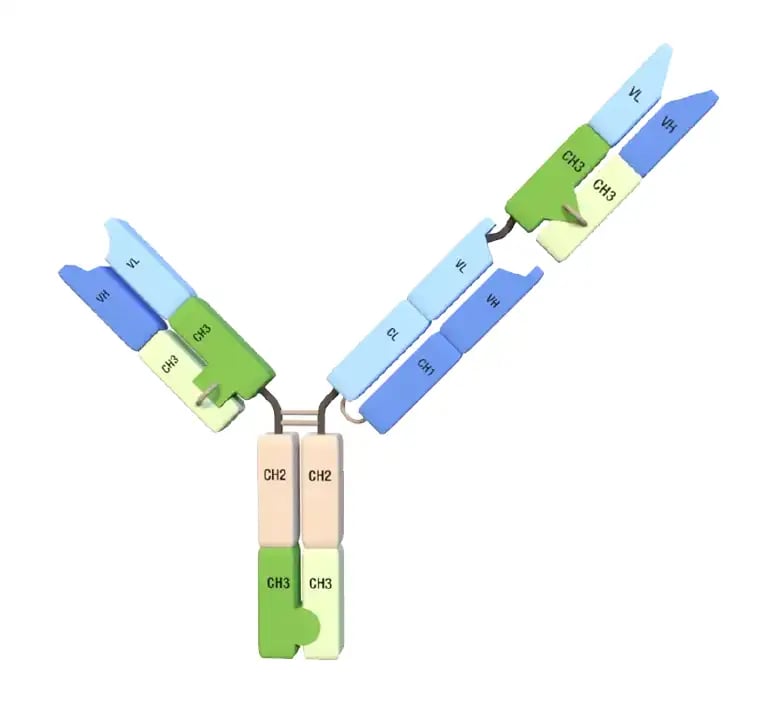
T-Body trispecifics express well in standard HEK and CHO systems and come off a single CH1 affinity step as well-resolved material. Mass spec confirms the molecule assembled the way it should.
- Expression in HEK and CHO is typically up to 1.5 g/L
- Single-step purification on CH1 resin, with up to 95% purity
- Well-resolved SEC and SMAC chromatograms, low misassembly
- LC-MS confirms correct assembly of the purified molecule
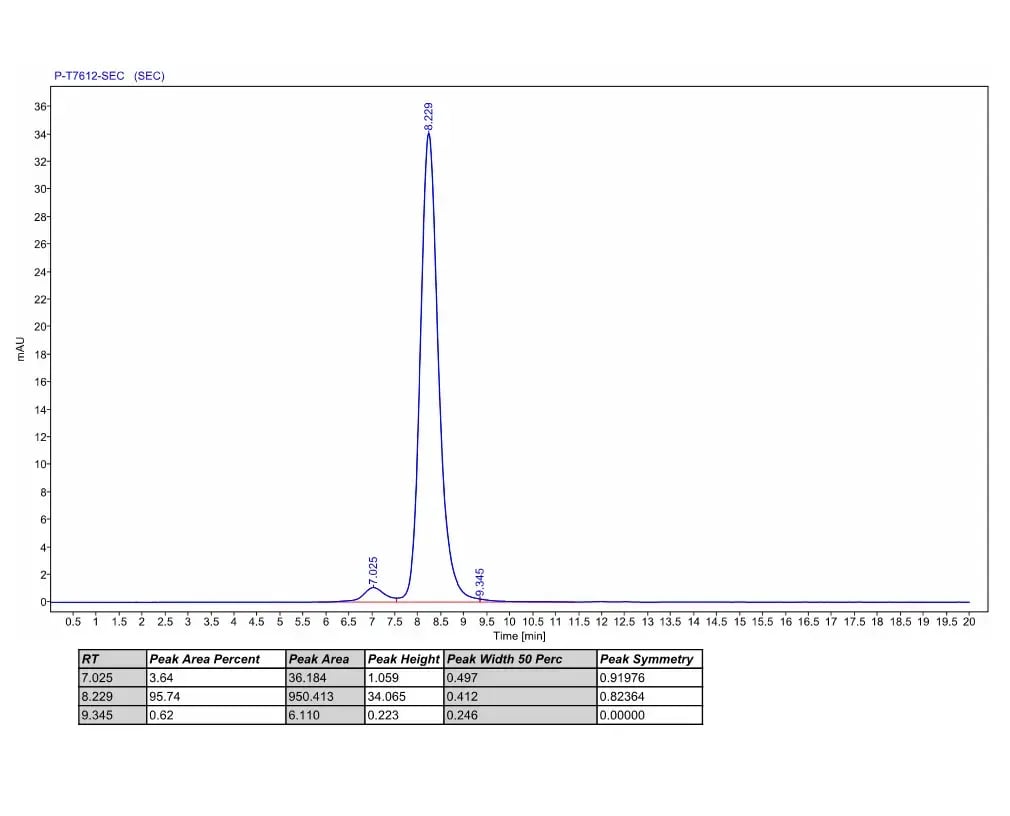
A representative chromatogram showing purity of T-Body trispecific after second step purification.
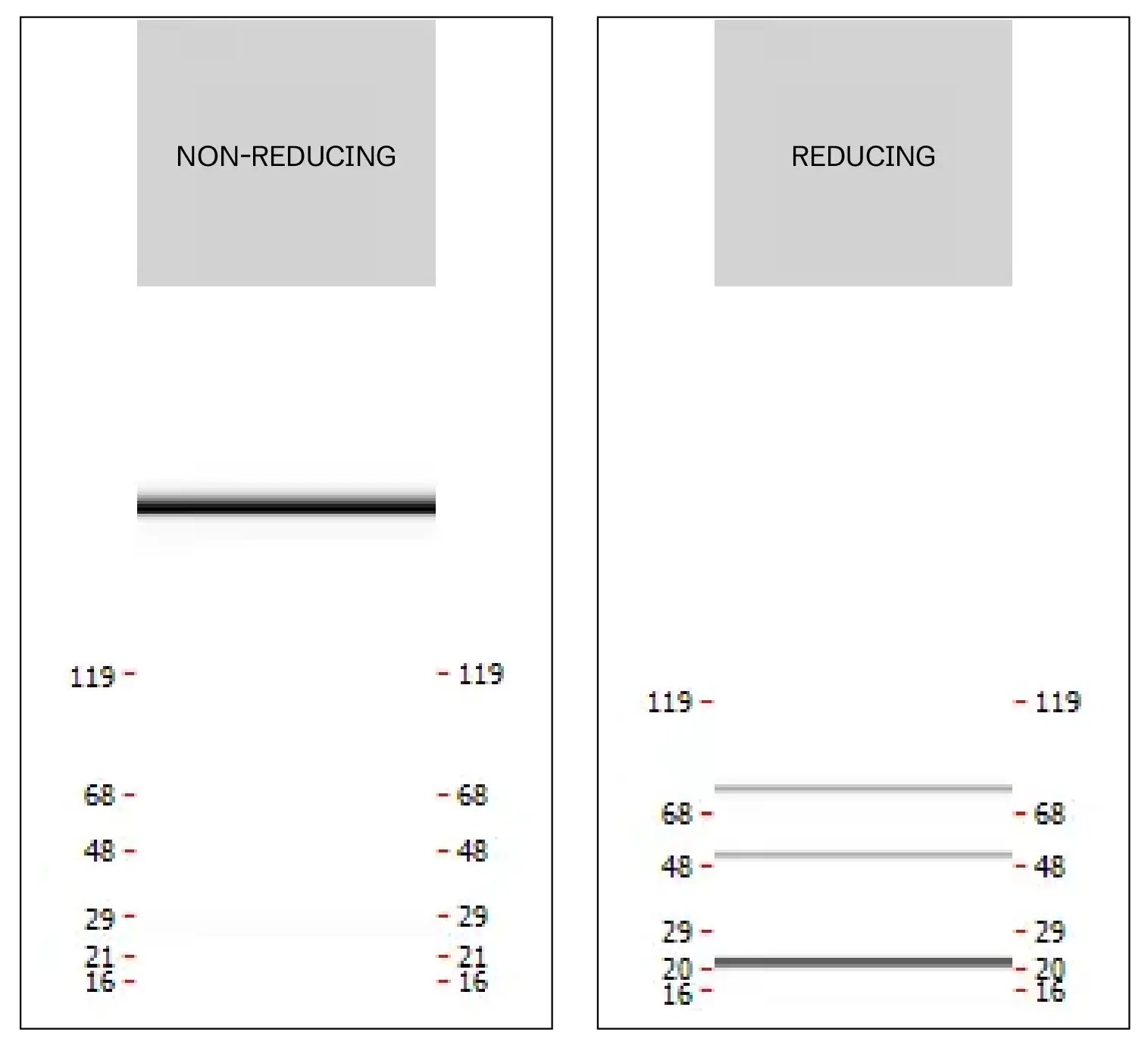
A representative capillary electropherogram showing purity of T-Body trispecific after second step purification.
T-Body Binding Kinetics
3 targets
Each arm is measured on its own. Binding to all three targets is assessed by BLI and SPR, and the trispecific’s kinetics line up with single-arm controls for every target. Both kappa and lambda arms perform well.
-
Simultaneous binding to three distinct antigens (Target A, B, C)
-
Measured by biolayer interferometry (BLI) and SPR
-
Each Fab arm’s kinetics assessed independently (ka, kd, KD)
-
Trispecific kinetics match one-armed controls, for kappa and lambda
.png?width=2000&height=2000&name=updated%20graphics%20(2).png)