TRISPECIFIC Antibody Discovery
Trispecific discovery simplified
Three binding specificities, one IgG-like platform. The T-Body platform broadens access to novel mechanisms of action, pushing the boundaries of antibody therapeutics.
TRISPECIFIC Antibody Discovery
Three binding specificities, one IgG-like platform. The T-Body platform broadens access to novel mechanisms of action, pushing the boundaries of antibody therapeutics.
trispecifics made
g/L from transient expression
Typical final purity
Compatible with ADC conjugation methods
Most antibody discovery services follow a fixed playbook: the same screens, the same milestones, the same handoff. T-Body Discovery is different. Every engagement focuses on your target product profile, scoped to your biological goals, and built around the molecule you actually need.
Think of it as having an experienced trispecific antibody engineering department on your team. You bring the biology and the strategic direction. We bring our proprietary T-Body trispecific platform and a team that knows how to get the most out of it.
Every program starts with a scientific conversation about your targets and what success looks like.
T-Body platform workflow is customized for your program. We have engineered multispecific ADCs, T-cell engagers, next-generation IO therapies, and more using this flexible solution.
Why choose trispecifics?
One drug, three coordinated levers working in a single molecule. For example, simultaneous targeting of tumor, effector cell, and immunosuppressive pathway
Amplify the benefits of bispecific antibody disease targeting by using a third arm to localize or transport the therapeutic to the desired disease location
Multi-antigen tumor offers “AND/OR” logic in one scaffold for fine-tuned avidity and spatial control, preventing escape through downregulation of target expression or the ability to combine logic gates with different mechanisms of action to enhance efficacy
Built-in redundancy across antigens or pathways, lowering escape risk without needing multiple products or complex combinations. When resistance is driven by pathway redundancy, trispecifics can block three nonredundant targets at once.
Access broader patient populations with broader coverage therapies by targeting complementary tumor targets
Most trispecific work runs into the same walls: engineering takes years, the platform fights you instead of helping, and you end up with one molecule that may or may not work. We built the T-Body platform to fix these issues and enable the next generation of therapeutics.
You bring the biological insight; we bring trispecific engineering expertise and a proprietary platform tuned to deliver winning development candidates. We work closely with you to make a game-changing drug candidate.
Multiple binding arms in multiple bispecific and/or trispecific configurations are tested in parallel. The ease of screening opens a larger design space, so you can find that rare combination that works for your program.
The platform is compatible with standard conjugation strategies and Fc modifications. It enables programs across oncology, immunology, neurology, and other disease areas.
From early-stage biotechs to large pharma seeking trispecific engineering they don’t have in-house. We structure the engagement to fit the program and the partner.
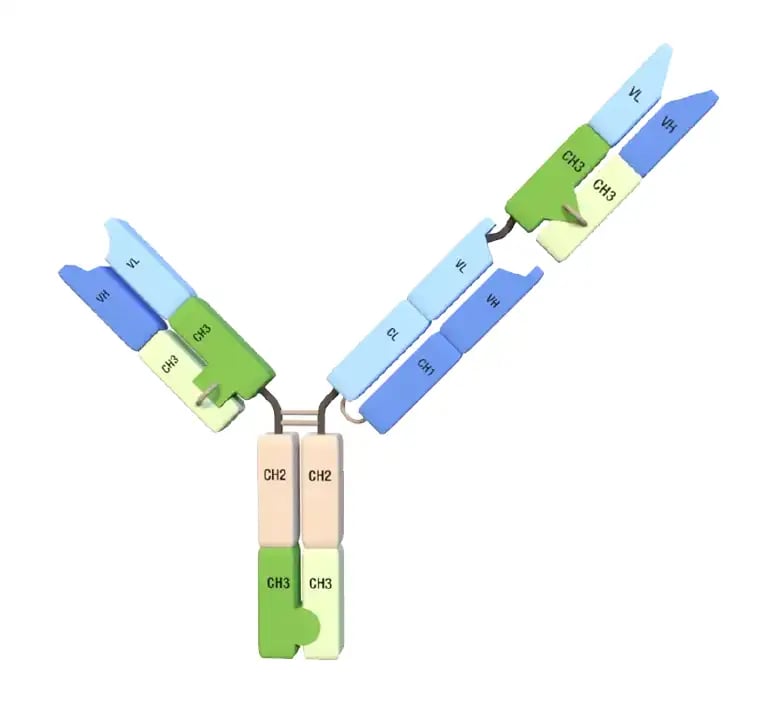
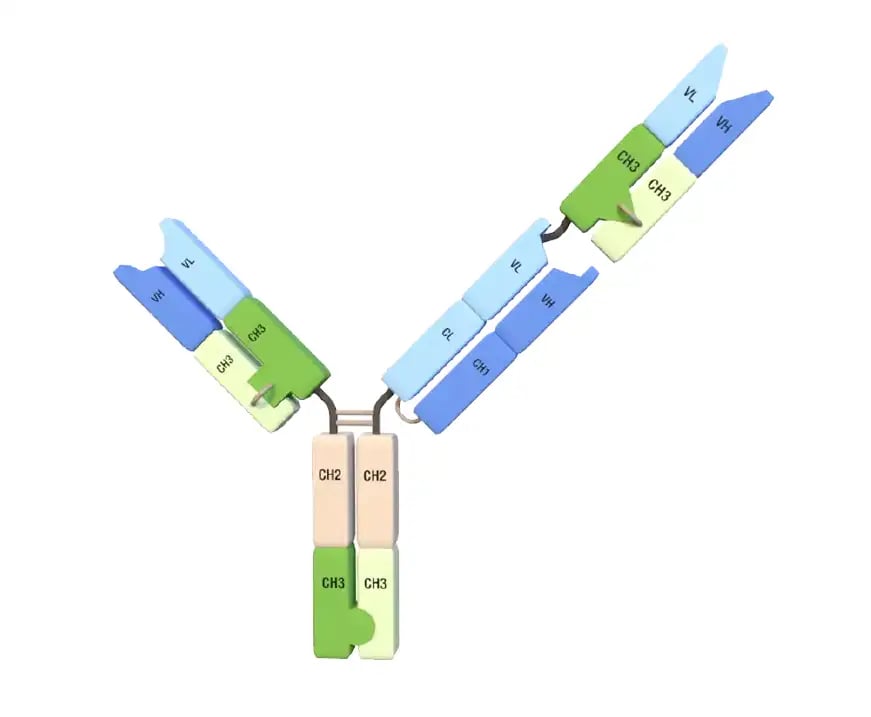
T-Body platform expands on the proven architectural principles used in our B-Body® bispecific platform by enabling a third specific Fab. This makes trispecific engineering more accessible to a wider range of therapeutics, including ADCs, T-cell engagers, next-generation immunotherapies, and more. Have a three-pronged therapeutic strategy in mind? Let’s explore it together.
We test multiple binding arms in multiple bispecific and trispecific configurations side by side, then let the data inform our lead selection. If a bispecific does the job, there’s no reason to add complexity. When the trispecific adds real improvement, that’s the molecule we select. Here are two programs that show how it plays out.
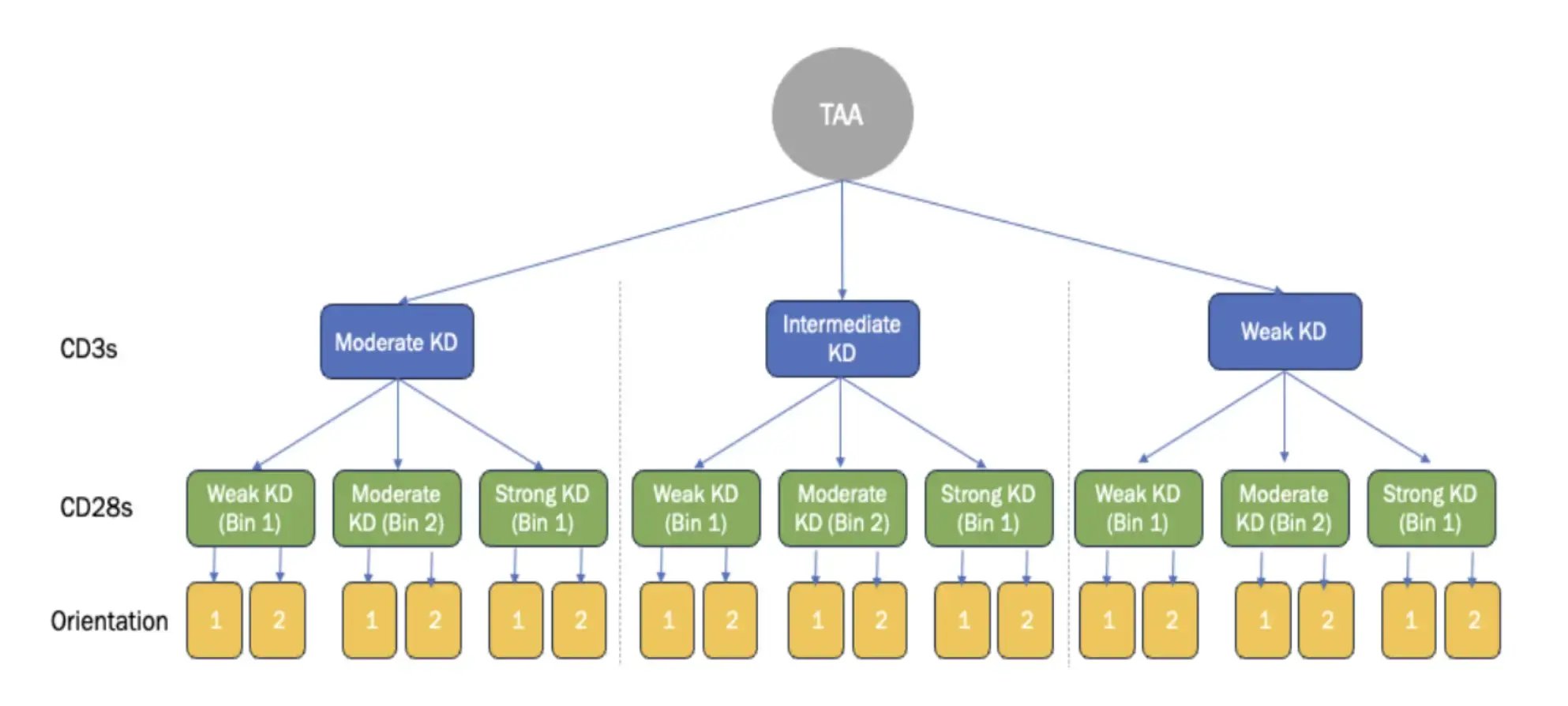
Starting from one tumor antigen, we built 18 trispecific variants in their final T-Body format, systematically varying CD3 affinity, CD28 affinity and epitope, and molecular orientation. All 18 were expressed and functionally characterized in 10 weeks, in collaboration with Alloy Therapeutics.
18 variants, in the final T-Body trispecific format
3 CD3 affinities: low, moderate, high
3 CD28 affinities across 2 epitope bins
2 molecular orientations
T-Body technology screens a large number of molecules to find the best combinations
Plug-and-play variable domain design
Every variant tested in its final trispecific format
No reformatting
Expression and functional testing run in parallel
3 CD3 affinities × 3 CD28 affinities across 2 epitope bins × 2 molecular orientations — every combination built and tested in the final trispecific format
Using the T-Body platform, you can screen many candidates, explore multiple design inputs, and compare them with the B-Body platform to identify differences, improvements, and risks.
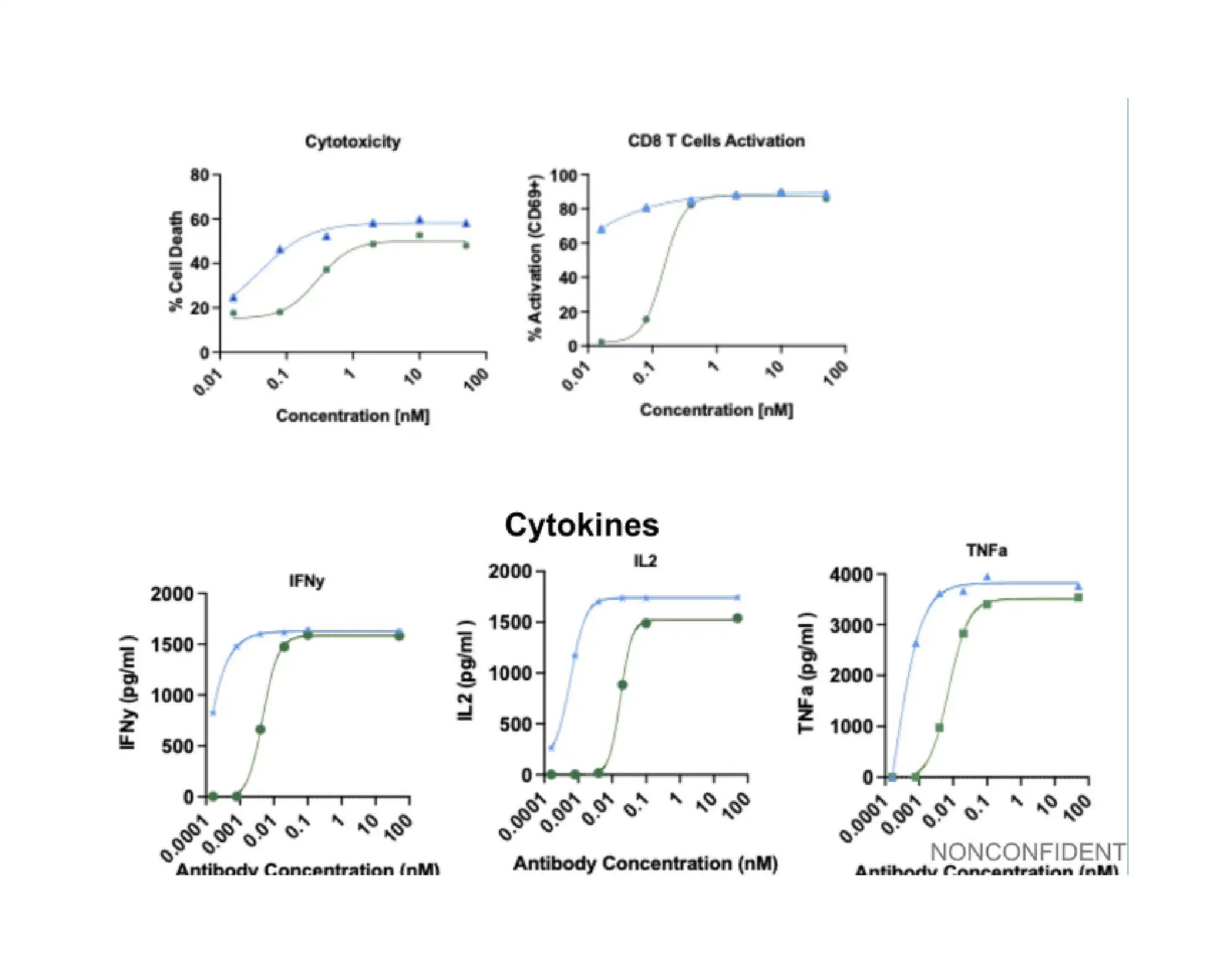
Example trispecific (blue) beat the corresponding bispecific (green), enabling more potent killing,
Improved T-cell activation and cytokine release when tumor cells were present, with baseline-level activity when they weren't.
From concept to candidate in less than 3 months.
The optimized trispecific (blue) was more potent than the corresponding bispecific (green) across cytotoxicity, CD8 T-cell activation, and cytokine release (IFNγ, IL-2, TNFα)
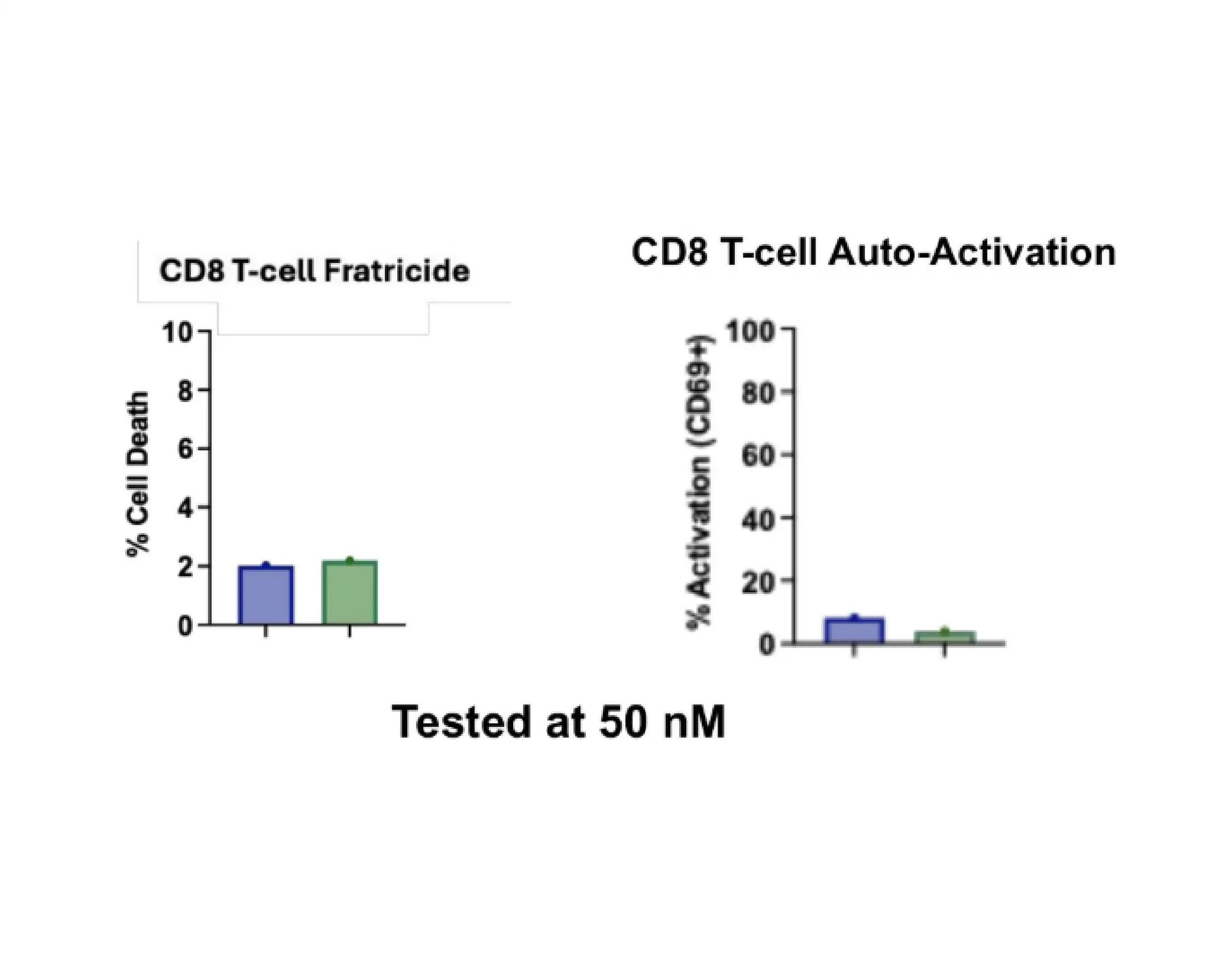
Both the trispecific (blue) and bispecific (green) showed minimal CD8 T-cell fratricide and auto-activation, and no cytokine release in the absence of tumor cells.
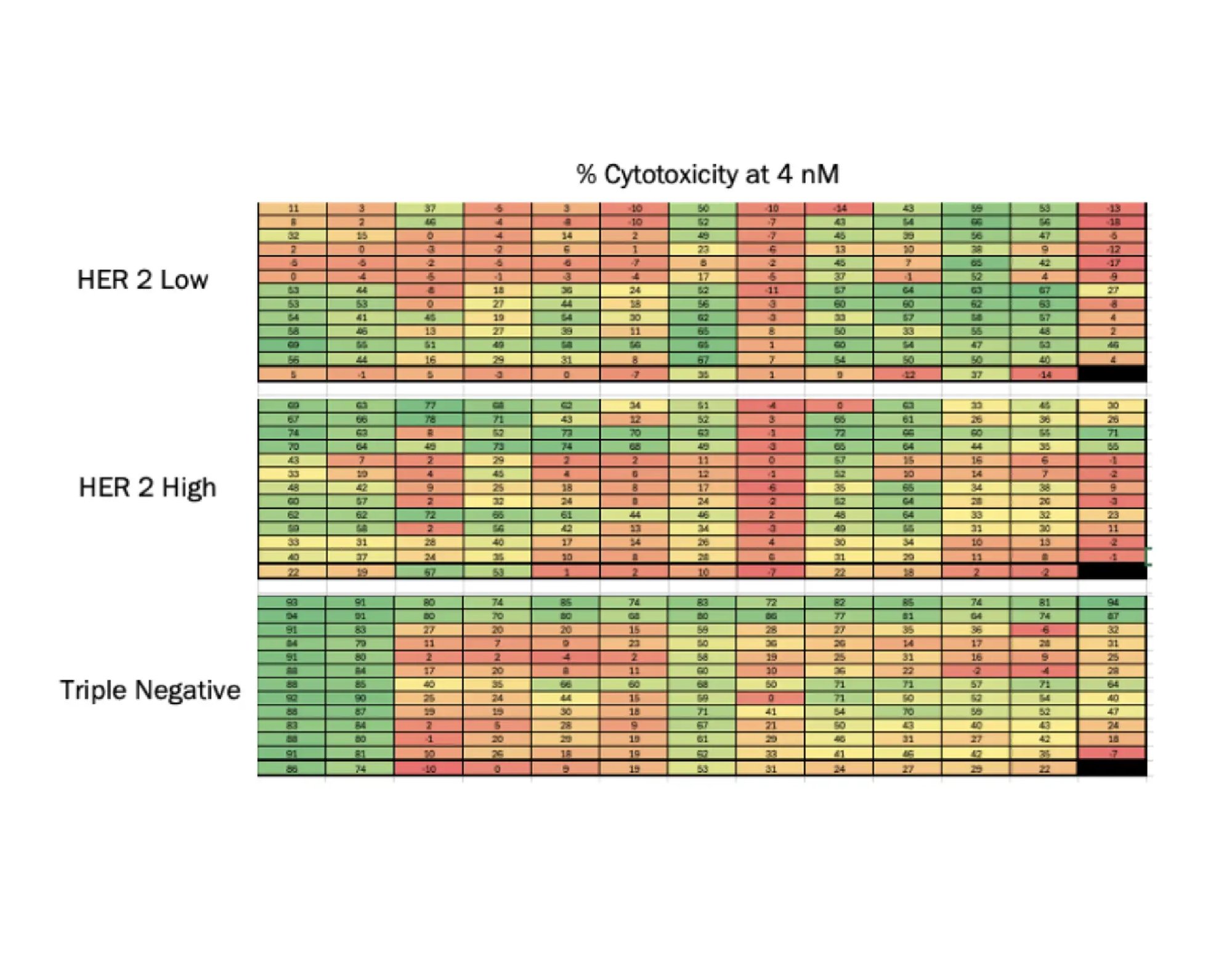
Breast cancer isn't one disease. We set out to find a single molecule that targets three distinct tumor profiles: HER2-high, HER2-low, and triple-negative.
A 12×12 bispecific matrix, screened for ADC killing
Included both biparatopics and one-armed controls
Screened every molecule for ADC killing across 3 tumor cell lines
Measured killing with a piggyback ADC assay (MMAE toxin), scored from plate data alongside developability
Combined and tested the best pairs as T-Body trispecifics
The T-Body platform screens a large number of molecules, then moves the winners straight into the trispecific format
Screening the bispecifics first shows which target pairs work, and comparing B-Body bispecific and T-Body trispecific formats head-to-head identifies the lead candidates.
Trispecifics clustered in the high-killing zone, past the 70% gates, ahead of the bispecifics and one-armed controls
Trispecifics showed broader and more potent ADC killing than the bispecifics
Trispecific ADCs are expected to work better in heterogeneous tumors
Per-cell-line killing at 4 nM for hundreds of bispecifics across Her2-low, Her2-high, and triple-negative lines. This screen finds the best bispecific target pairs, informing us which trispecifics should be built.
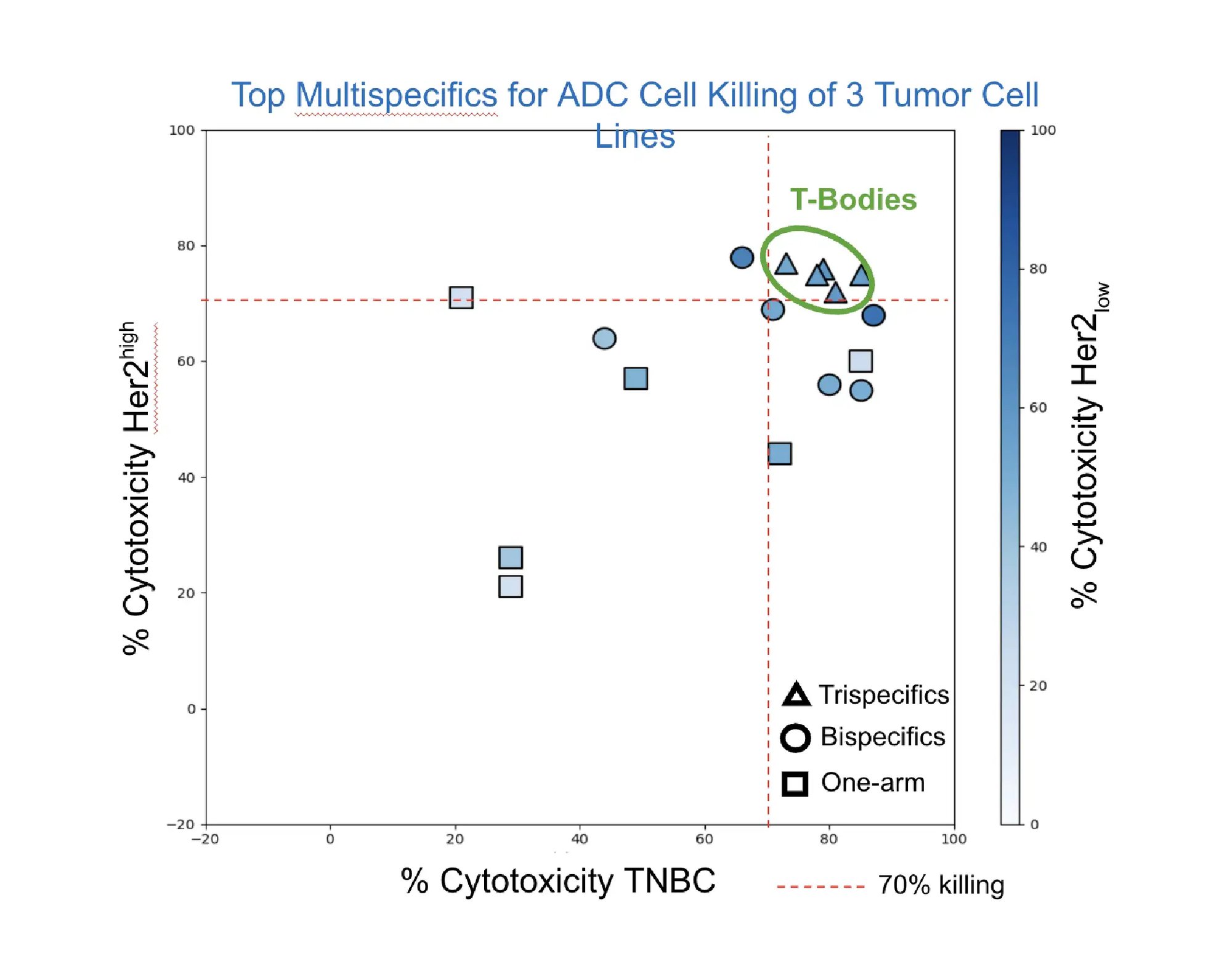
Trispecifics (triangles, circled in green) cluster in the high-killing zone, past the 70% gates — ahead of bispecifics (circles) and one-armed controls (squares)
Every engagement is custom, but most use one of these approaches. Tell us what you have and what you need, and we’ll work with you to make it happen.
Bring your binders, and we will engineer them into a T-Body trispecific, run characterization, and hand back a development candidate with full data.
You bring the targets and the biological hypothesis. We handle binder discovery, trispecific assembly, and characterization end-to-end.
You provide one or two arms. We identify and provide the others, using them to build your trispecific. Useful when you have anchor binders but need supporting arms.
Soon, you’ll be able to browse our pipeline, including our trispecific ADC portfolio. License a program and take it to the clinic or iterate on it with us.
There’s no fixed playbook, but every engagement runs through these four phases. The timeline depends on the scope of the work.
We work with your team to develop a Target Product Profile (TPP) that guides the engineering process and the entire plan.
Run the screening funnel from concept through lead candidates. Iterate based on the data as it comes in.
Together with your team, pick the lead candidate(s) ready to move into IND-enabling studies. Final selection is based on the full data package.
Full data package transferred. We stay invested, continuing to support your team as the molecule moves toward the clinic.
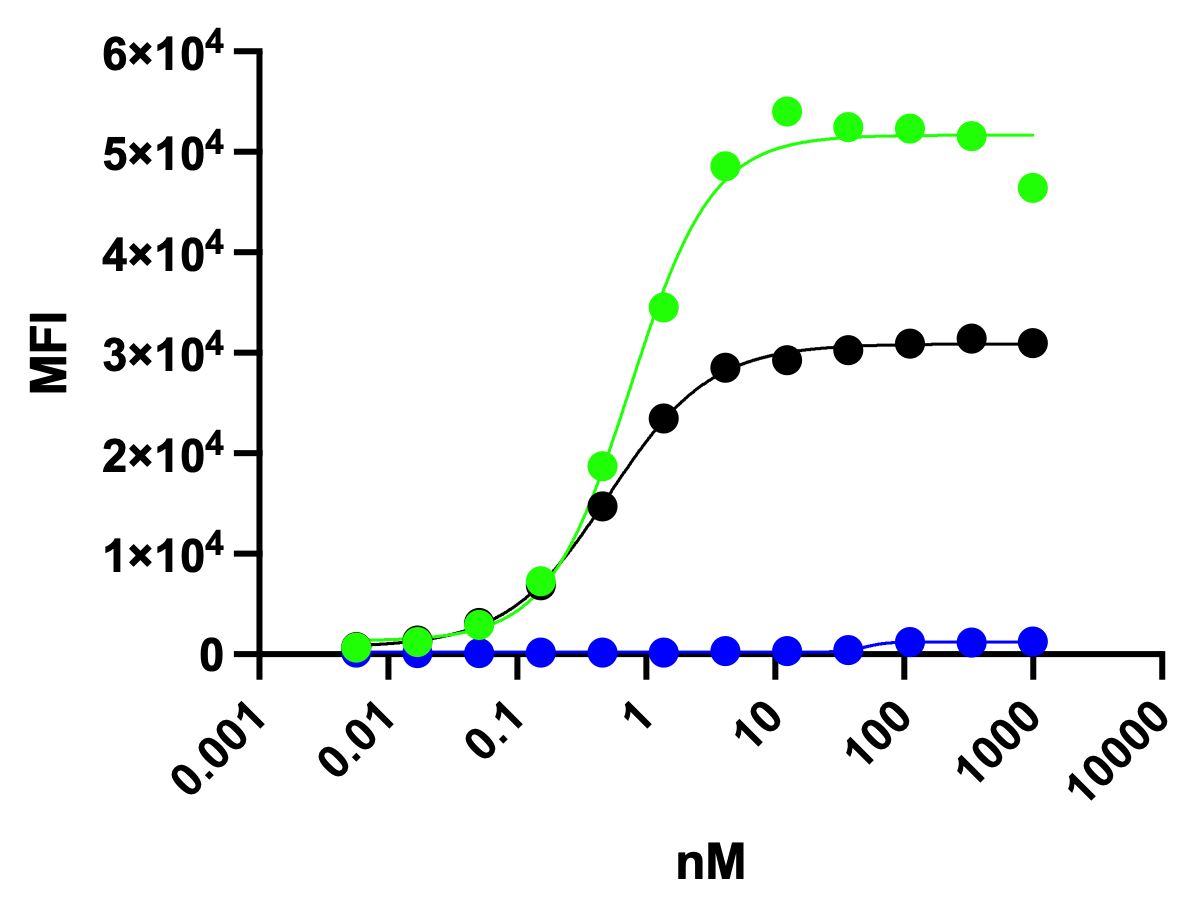
Most programs add structured characterization beyond what’s included in the matrix screening: biophysical, binding kinetics, and formulation. We run all of it in-house. You don’t need another outsourced partner or potential in-house lab delays.
BIO
Carterra LSA high-throughput binding kinetics and epitope diversity, validated cell binding analysis, in silico liability scanning, mass spec for intact mass confirmation, full developability assay panel, and high-concentration formulation optimization.
DEV
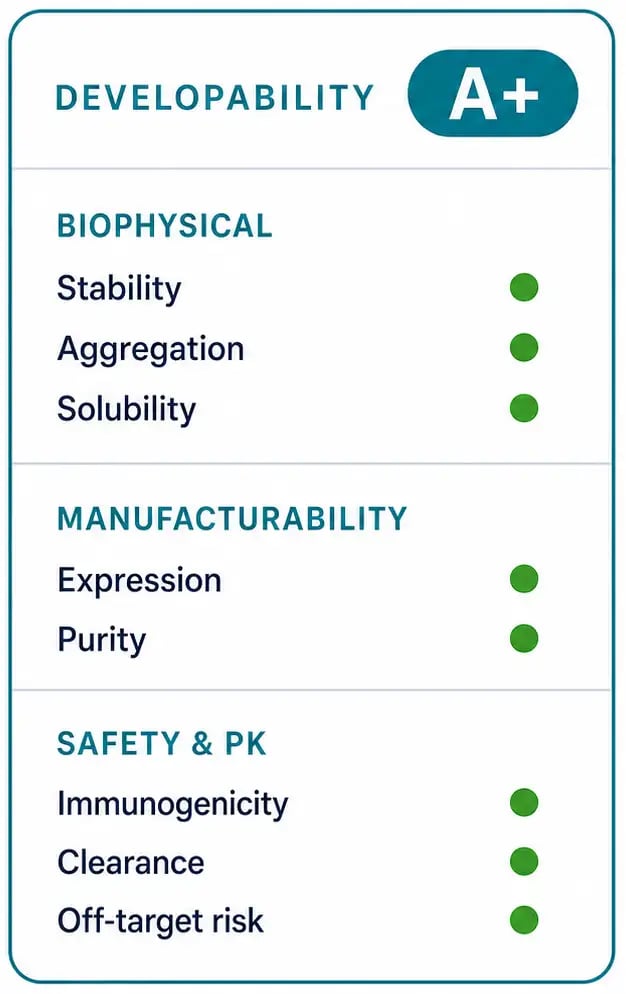
Expression and purity, thermal stability, self-association, aggregation, solubility, immunogenicity risk, viscosity, each measured with a validated technique. The full developability data sits behind every lead candidate we hand off.
T-Body Discovery programs are first and foremost partnerships. The collaboration and business terms reflect the Target Product Profile and the agreed work plan.
Pricing and terms reflect the Target Product Profile developed through our collaborative process. Each project is unique. We discuss scope, timeline, and structure during planning, before any commitments are made.
No two programs are alike, and we don’t treat them that way. We offer a range of licensing models, so you can structure a deal that aligns with your development timeline, therapeutic area, budget, risk tolerance, and commercial goals. Evaluation options, milestone-based terms, tiered royalties, and sublicensing options are all on the table.
Trispecific programs rarely start from scratch. Most begin with monoclonal antibodies that have already been characterized — discovered through our mAb Discovery service, screened as bispecific combinations through B-Body® Discovery, or brought in from your own pipeline. The T-Body™ platform takes those validated building blocks and creates a powerful three-armed antibody.
Find mAbs first
2-15 fully human leads in 8 weeks. Feed them directly into T-Body™ programs.
Bispecific matrix
288+ combinations screened. Top pairings inform trispecific selection.
Platform access
Want to run the platform in-house? Technology licensing available.
Compare all options
Get a handy table to see which service is right for you.
It has progressed to cell line development and shows IgG-like PK profiles.
T-Body technology is more human-like. Across all multispecific platforms, Fab-based / IgG-like formats carry much lower inherent ADA risk and higher stability than scFv-based approaches.
Yes. Both B-Body and T-Body platforms are compatible with the Fc mutations researchers commonly use.
Yes. One thing to note: cysteine conjugation on T-Body maxes out at DAR 6. Other conjugation chemistries don't have this constraint.
Licensing terms are determined program by program. Reach out and we can talk through your specific program.
We have validated many different geometries and there are more possibilities on the table. Bring us your ideas and we'll work with you to figure out the best geometry for your biology.
Find mAbs first
Generate fully-human binders for your targets before they enter the B-Body matrix.
Start with two arms
If a bispecific does the job, start with the two-arm platform. Same approach, less complexity.
Go deeper
Add biophysical, binding, and functional characterization to the data package.
Three targets
Platform overview, available geometries, and the science behind the trispecific format.
Tell us about it. We’ll work through whether T-Body is a fit, scope the engagement to your biology, and put together a partnership structure that works for where your program is.
Your information is 100% confidential.
We don't share your data with third parties, add you to marketing lists without permission, or contact you about anything other than this request. Target biology is treated as confidential. Need an NDA first? Just say so. We'll send one over.