Day half-life in hFcRn Tg32 mouse PK study
INVENRA’S ADC DESIGN STRATEGIES Four ways a third arm boosts an ADC
Our trispecific ADC work is organized around four mechanisms. Each addresses a different ADC challenge, and each can be screened against its bispecific equivalent to confirm the third arm (trispecific) is worth pursuing.

Biparatopic Plus
Two arms bind different epitopes on the same target, driving the receptor clustering that enhances internalization. The third arm adds breadth or blocks a route of resistance.
Example: HER2 × HER2 × HER3

Three-antigen targeting
Three tumor antigens on one molecule, so a heterogeneous tumor has fewer places to hide.
Example: Nectin-4 × EGFR × B7-H3

HYPER-Internalization™
Deliberately weak tumor-antigen arms only cluster into strong binding where VEGF is abundant, in the tumor microenvironment. It lets you use targets that are too broadly expressed to hit at full affinity. Strong in vitro data; in vivo confirmation is the open question.
Example: EGFR × VEGF × HER3

Stromal plus tumor (early stage)
Reach both the tumor and the supporting stroma around it. Our earliest-stage mechanism, likely paired with a dual-payload strategy.
Example: cMET × B7-H3 × LRRC15
THE ANTIBODY PLATFORM Built to carry a powerful payload
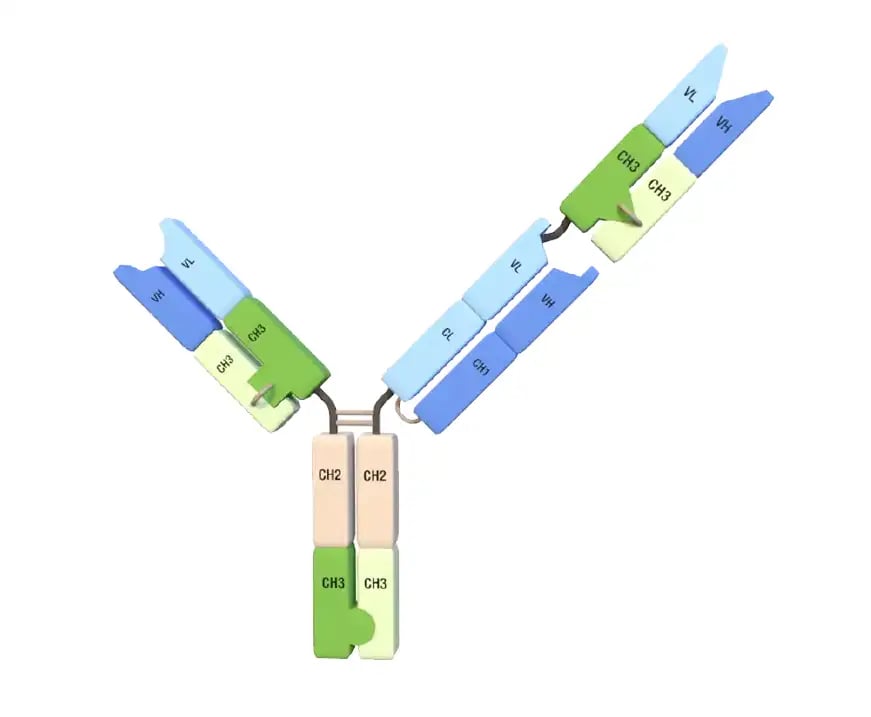
Fragment formats such as scFvs and VHHs tend to be more hydrophobic, and that liability compounds as the architecture gets more complex and a hydrophobic payload is attached. Our B-Body® and T-Body™ platforms are built entirely from Fabs, the stable building blocks nature uses in the human body, so the molecule starts from a stronger foundation.
- Compatible with standard conjugation strategies
ADC compatibility has been validated by a third party. Cysteine conjugation on T-Body has reached DAR 6. - Expresses like a mAb
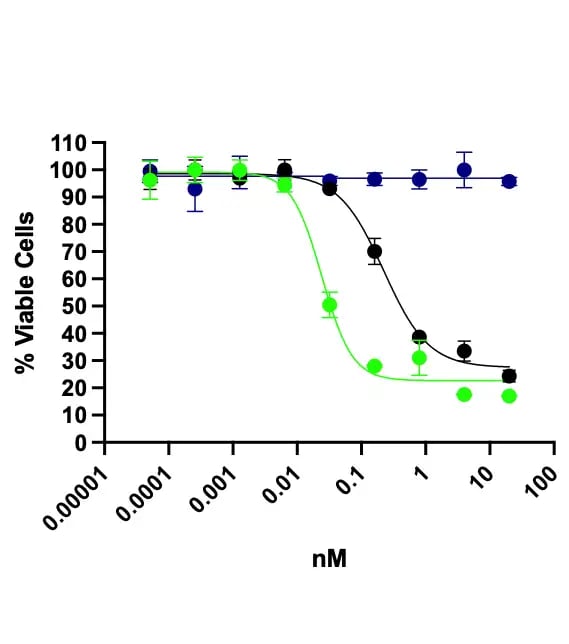
T-Body™ trispecifics have expressed up to 1.5 g/L in transient expression and have been concentrated up to 100 mg/mL. - IgG-like pharmacokinetics
T-Body™ trispecifics have shown a 6.6-day half-life in rats and 8.8 day half-life hFcRn Tg32 mice.
- Standard CMC
Protein A and ion exchange polishing. - No common light chain
Kappa and lambda light chains, standard Fc modifications, and binders from any source. - The T-Body™ trispecific scaffold
Three Fab arms on one IgG-like antibody, with engineered constant domains that direct correct chain pairing.
Screen hundreds of bispecifics first
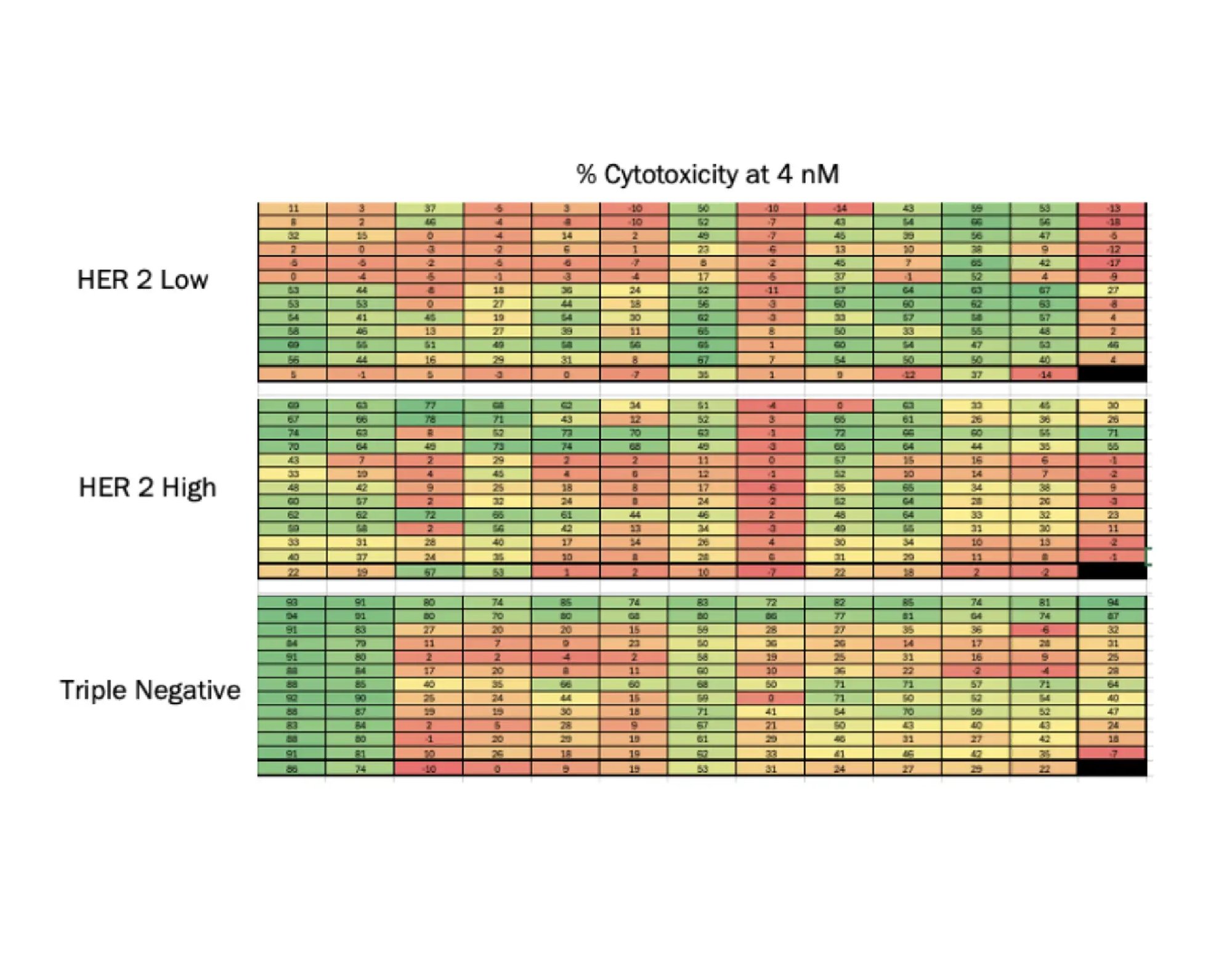
Per-cell-line killing at 4 nM for hundreds of bispecifics across Her2-low, Her2-high, and triple-negative lines. This screen finds the best bispecific target pairs, which then inform which trispecifics to build.
Then let the activity pick the winners
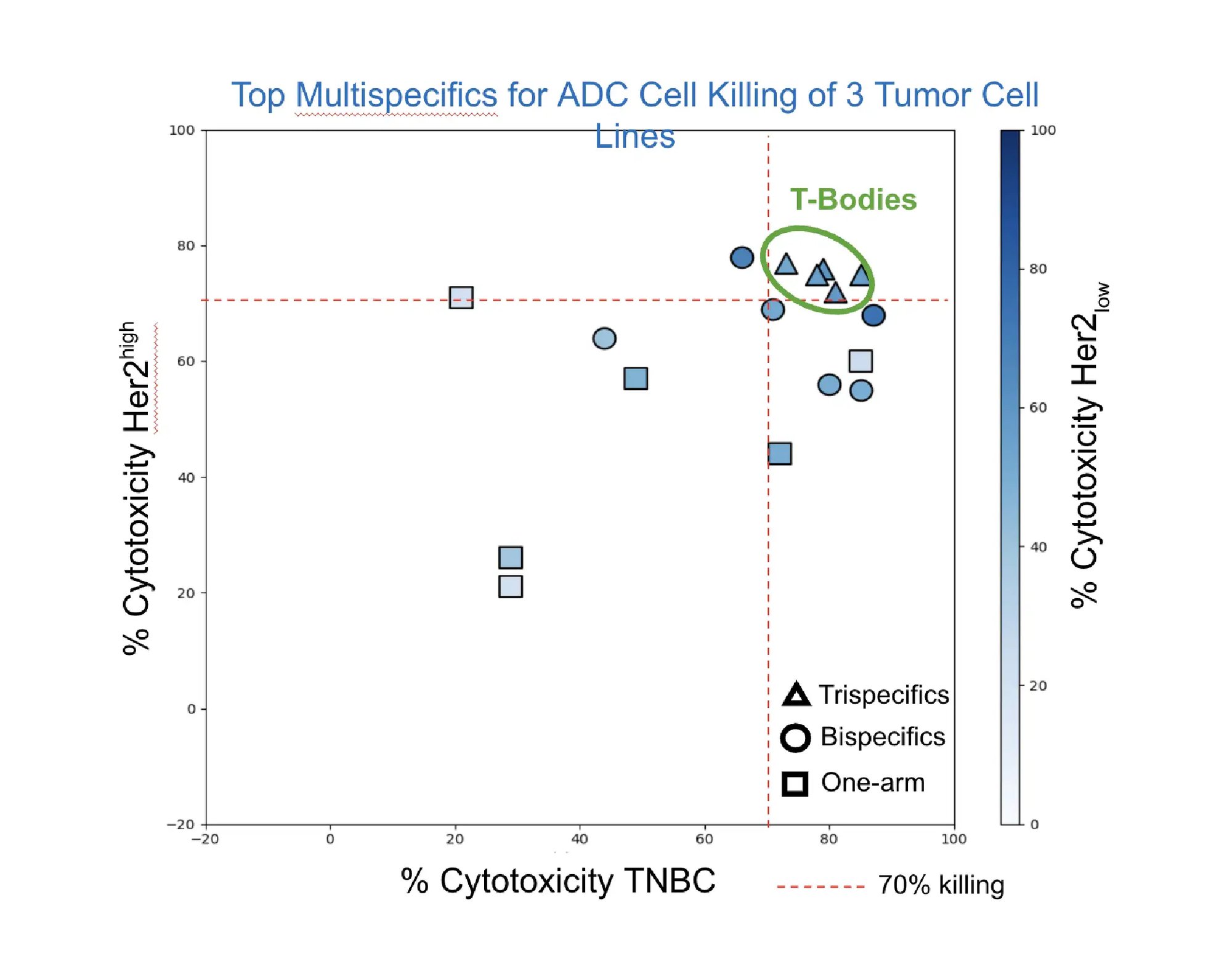
Formats compared head-to-head
Trispecifics (triangles, circled in green) cluster in the high-killing zone, past the 70% gates — ahead of bispecifics (circles) and one-armed controls (squares).
- Comparing B-Body bispecific and T-Body trispecific formats head-to-head identifies the lead candidates.
- Trispecifics showed broader and more potent ADC killing than the bispecifics.
- Trispecific ADCs are expected to work better in heterogeneous tumors.
Optional add-ons Get deeper characterization
Most programs add structured characterization beyond what’s included in the matrix screening: biophysical, binding kinetics, and formulation. We run all of it in-house. You don’t need another outsourced partner or potential in-house lab delays.
BIO
Full biophysical + binding suite
Carterra LSA high-throughput binding kinetics and epitope diversity, validated cell binding analysis, in silico liability scanning, mass spec for intact mass confirmation, full developability assay panel, and high-concentration formulation optimization.
DEV
Extensive developability capabilities
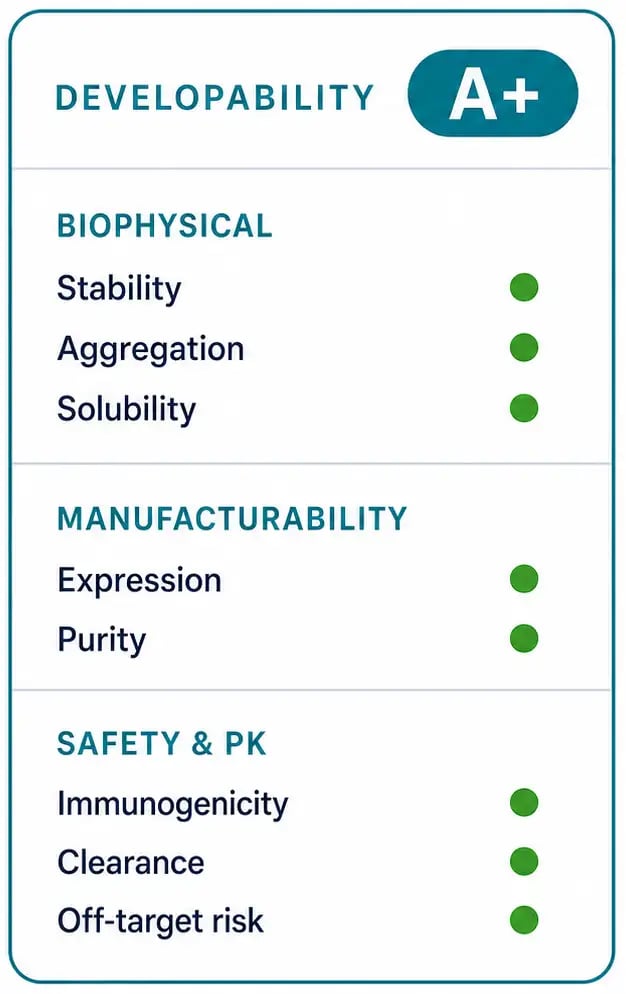
Expression and purity, thermal stability, self-association, aggregation, solubility, immunogenicity risk, viscosity, each measured with a validated technique. The full developability data sits behind every lead candidate we hand off.

52 views of cancer
First in class trispecific ADC molecules
Our 52 Views project goes beyond developing trispecific ADCs and making these novel therapeutics available to partners. We are creating a one-of-a-kind playing card deck that celebrates the creativity, resilience, and spirit of people whose lives have been touched by cancer.
Each of the 52 cards features original artwork from a cancer patient, survivor, or immediate family member, making every card a unique view of the human experience with this disease.
 Bonnie Hammer Executive Vice President, Research & Development, Invenra
The preclinical data demonstrate the amazing potential of trispecific ADCs. Invenra is exploring how trispecific targeting can improve payload delivery and address signaling pathways that may contribute to treatment resistance."