At a glance
On October 13, Invenra presented "From Bispecific to Trispecific Antibodies: Reimagining the Next Generation of ADCs" at the 17th World ADC Conference in San Diego. Download the full slide deck below.

- Invenra’s B-Body® bispecific and T-Body™ trispecific platforms enable the development of next-generation antibody-drug conjugates (ADCs) designed to improve tumor targeting, internalization, and payload delivery.
- Our World ADC presentation highlights two trispecific ADC programs: HER2 × HER2 × HER3 and EGFR × VEGF × HER3, each addressing different limitations of conventional ADCs.
- HER2 × HER2 × HER3 demonstrates faster internalization, improved in vitro cell killing, and superior antitumor efficacy in a mouse model compared with several HER2- and HER3-directed ADC comparators.
- EGFR × VEGF × HER3 uses Invenra’s VEGF-Activated Avidity Lock (VAAL) approach to trigger antibody binding and internalization in the presence of VEGF, demonstrating improved tumor-cell killing and a potentially wider therapeutic window in vitro.
- Invenra’s T-Body™ platform supports IgG-like trispecific antibodies with strong developability characteristics, including high expression yields, stability, standard purification compatibility, and validated ADC conjugation.
- Together, these findings demonstrate how trispecific ADC architectures could help overcome key challenges in ADC development, including tumor heterogeneity, resistance, insufficient internalization, and on-target toxicity.
What our World ADC talk covers
We start with a problem conventional ADCs run into: less than 1% of an injected dose binds tumor cells, and less still gets inside them. We then walk through preclinical data on two trispecific ADC programs built on Invenra's T-Body™ platform.
HER2 × HER2 × HER3, evaluated in breast cancer models, binds two sites on HER2 plus HER3. In SK-BR-3 cells, it internalized faster than trastuzumab, pertuzumab, or Invenra's own HER2 × HER3 bispecific.
In ADC assays across three cell lines, it showed stronger cell killing than the tested HER2 and HER3 monoclonal antibodies. It outperformed HER2 and HER3 antibodies and a HER2 biparatopic in ADC assays across three cell lines.
In an ongoing mouse study, it also showed greater tumor-growth suppression than HER2, HER3, and HER2 biparatopic ADC comparators. The molecule expresses at up to 1.5 g/L in transient CHO and conjugates to a uniform DAR of 6.
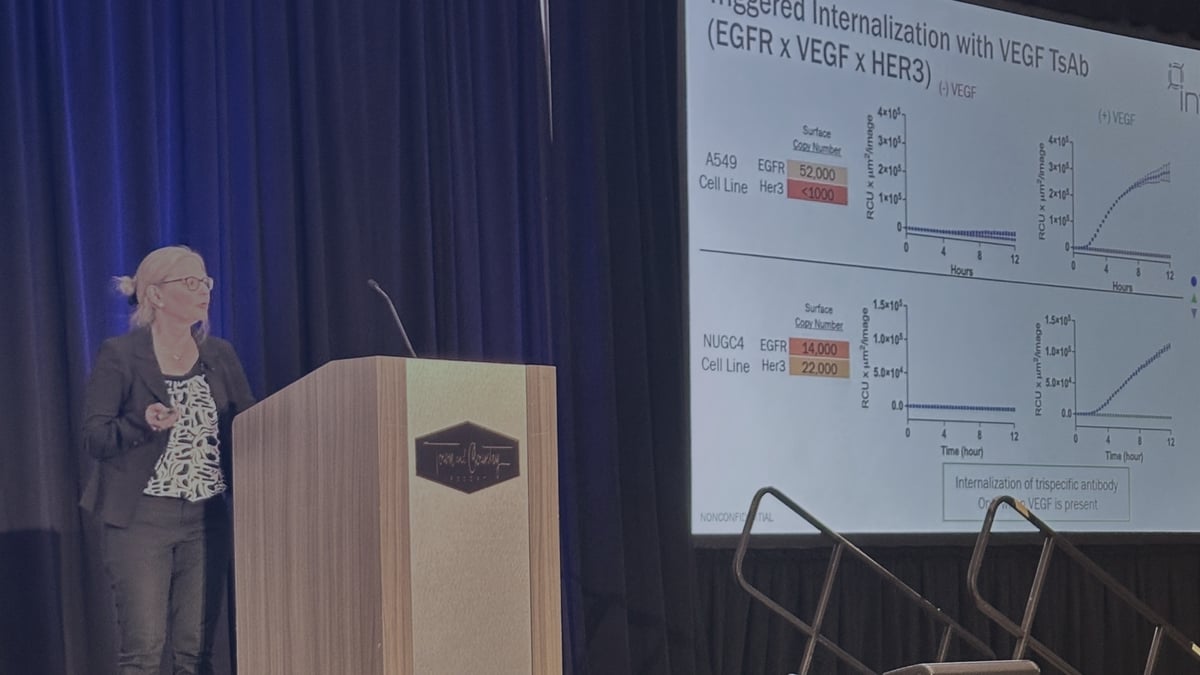
EGFR × VEGF × HER3 runs on a mechanism Invenra calls VAAL, short for VEGF Activated Avidity Lock. (Its EGFR arm binds weakly on its own.)
VEGF, which is often elevated in the tumor microenvironment, can link two antibodies together and trigger stronger binding and internalization. In A549 and NUGC4 cells, the trispecific internalized only when VEGF was present.
In vitro ADC assays also demonstrated VEGF-dependent increases in cell killing, supporting the potential for improved tumor selectivity and a wider therapeutic window.
In vivo efficacy studies are next.
About the T-Body™ trispecific platform
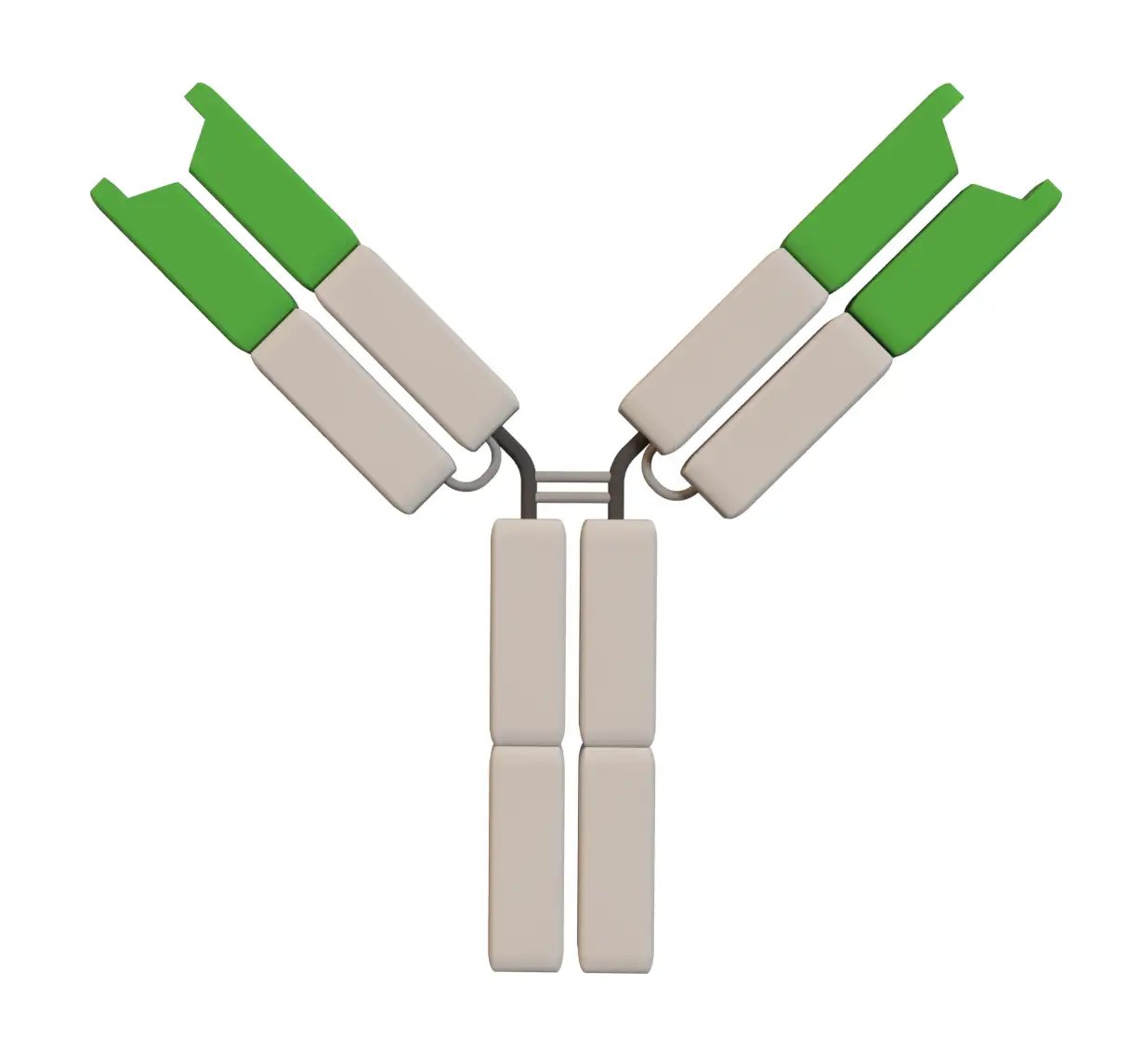
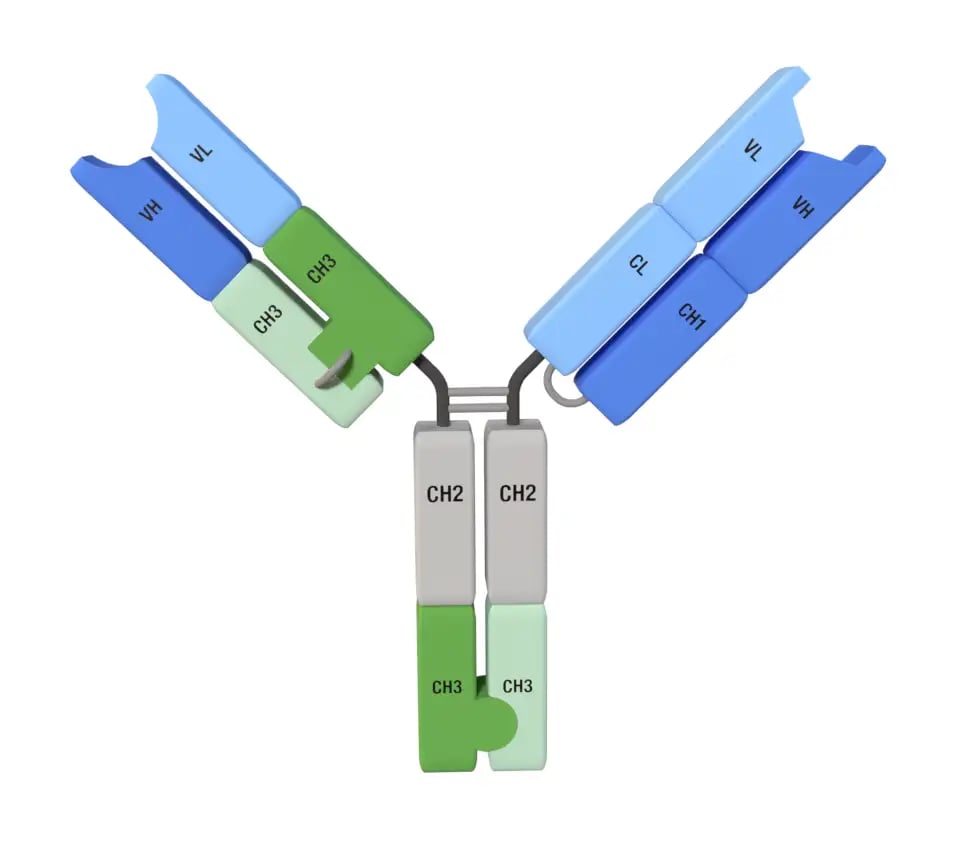
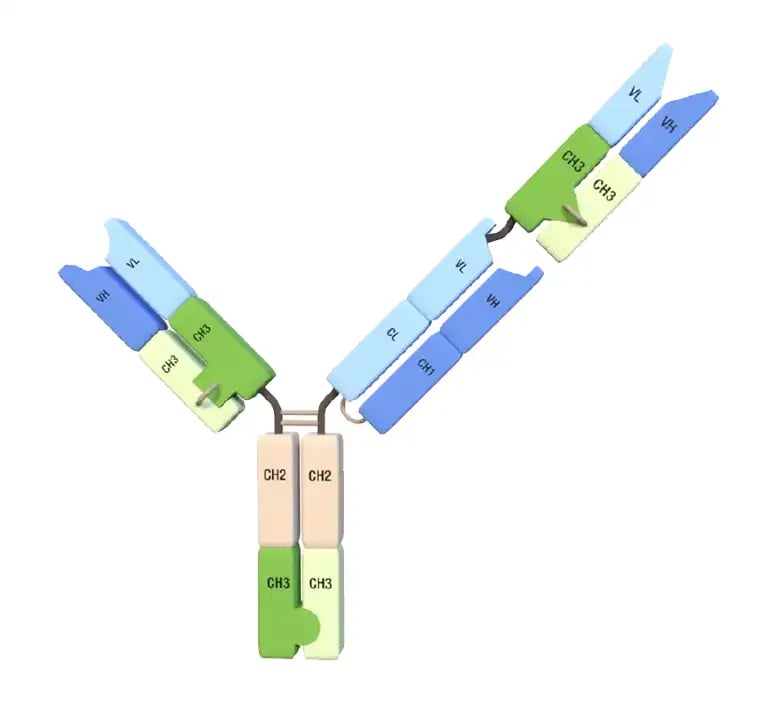
The T-Body™ platform puts three binding arms on a single IgG-like antibody, so you can engage three targets at once. It uses novel constant-domain engineering strategies and was built by the same team that brought you the B-Body bispecific platform.
The result is a trispecific you can express and purify like a monoclonal antibody. T-Body trispecific antibodies unlock new mechanisms of action, enabling development of significantly more advanced therapeutics.
T-Body engineering focuses on the constant domains and the variable domains remain untouched. Each Fab arm pairs correctly on its own, ensuring no mispairing. It’s a simple, elegant approach enabling you to go from concept to lead unencumbered by trial and error.
Here's a look at the T-Body:
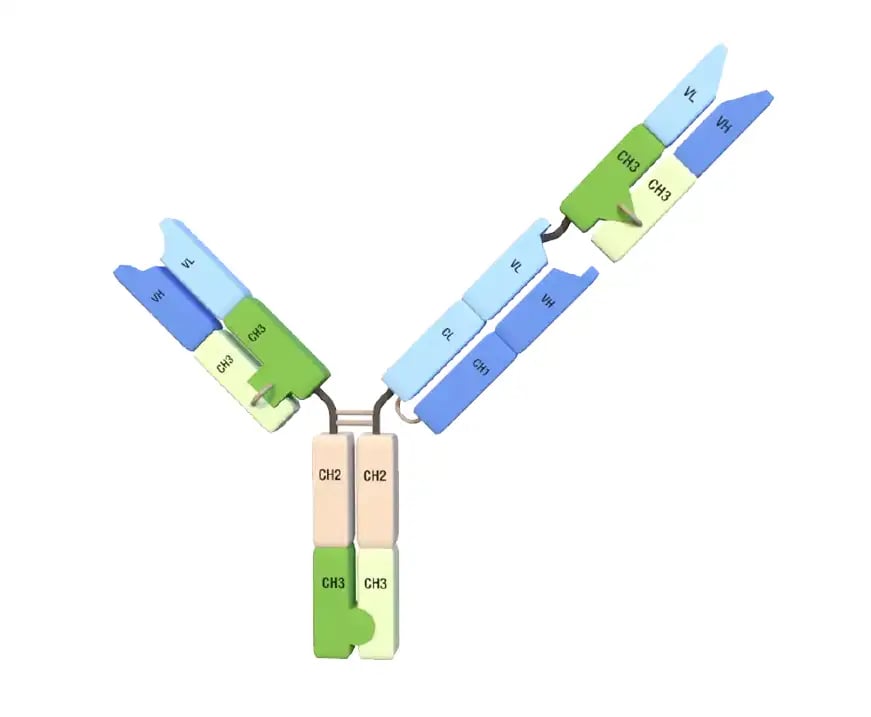
Proprietary CH3 domain pairs: Replace CH1/CL in two of the three Fab arms with two uniquely configured CH3 domain pairs. Solve light-chain mispairing and create natural isoelectric-point asymmetry for clean, straightforward purification.
Symmetrical chain inversions: Proprietary heavy- and light-chain arrangements in the Fab arms deliver robust expression and efficient purification.
Knobs-into-holes Fc: Clinically validated heavy chain heterodimerization. Compatible with standard Fc substitutions for effector function engineering.
Validated binding kinetics: BLI and SPR confirm simultaneous 3-antigen engagement. Each arm’s kinetics is independently assessed. Comparable performance between trispecifics and one-armed controls.
Custom trispecific formats: The platform flexibility allows nearly endless orientations, valencies, and formats.
Learn more about T-Body for ADC discovery »
Fragment formats such as scFvs and VHHs tend to be more hydrophobic, and that liability compounds as the architecture gets more complex and a hydrophobic payload is attached.
Our B-Body and T-Body platforms are built entirely from Fabs, the stable building blocks nature uses in the human body, so the molecule starts from a stronger foundation.
Introducing 52 Views of Cancer
Our presentation sorts Invenra's trispecific ADC designs into four card suits, one per mechanism: biparatopic plus, novel mechanisms like VAAL, three tumor antigens, and stromal plus tumor targeting.
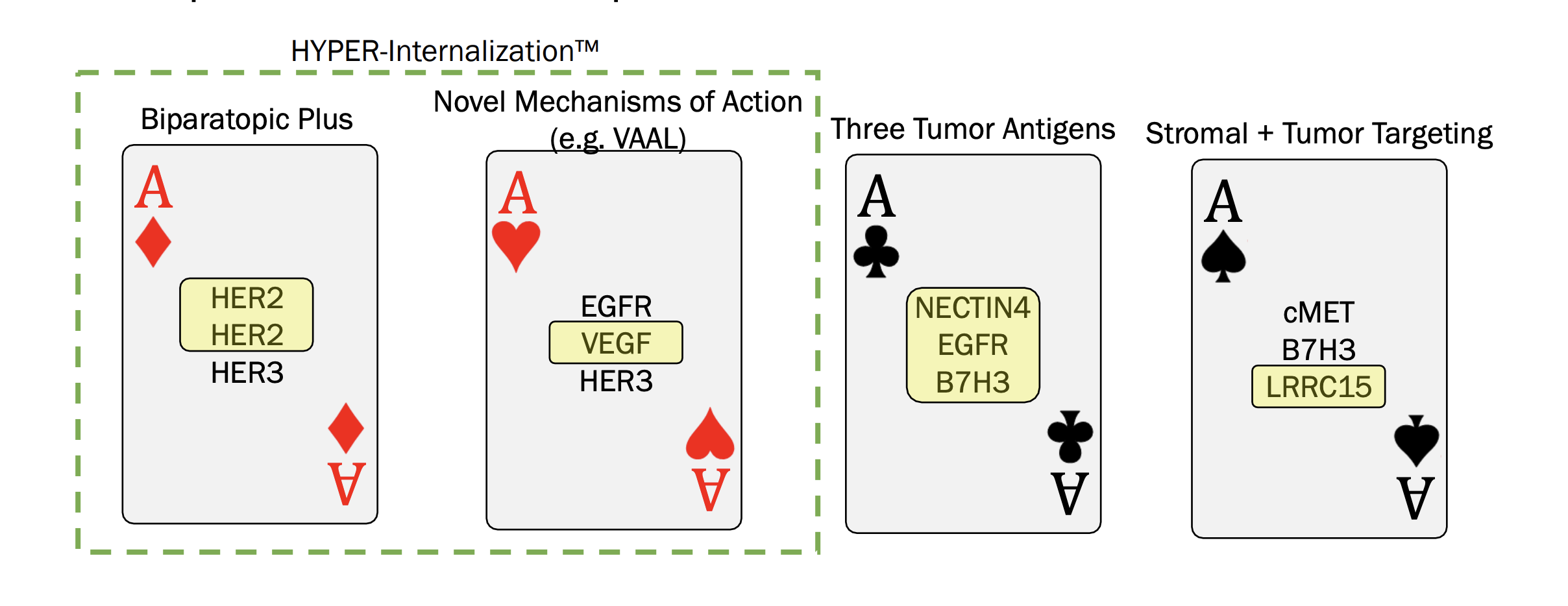
The card theme ties back to 52 Views of Cancer, the playing card deck Invenra debuted at this year's World ADC event. Each card carries original artwork by a different cancer patient, survivor, or family member, and the deck is how Invenra is introducing its ADC program.
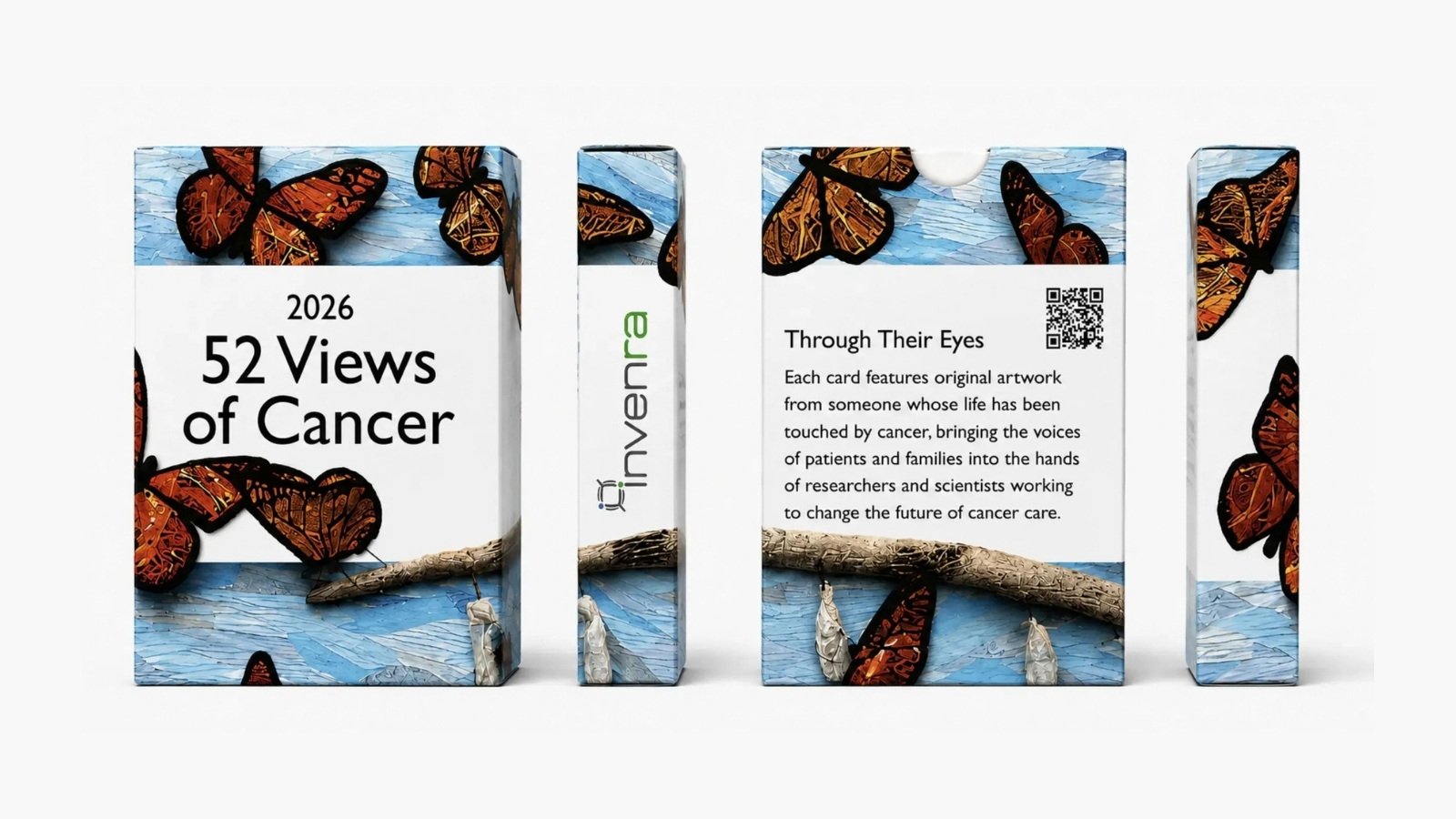
Read the artist stories, or if you're at World ADC, pick up a deck at Booth 35. To discuss the data or partnering on a multispecific ADC asset, contact the Invenra team.
Talk to us
Working on an ADC and wondering whether a third arm would help? Tell us about the targets and the tumor setting, and we'll give you a straight read on the best path forward.
Contact us »
Read our related articles and explainers: