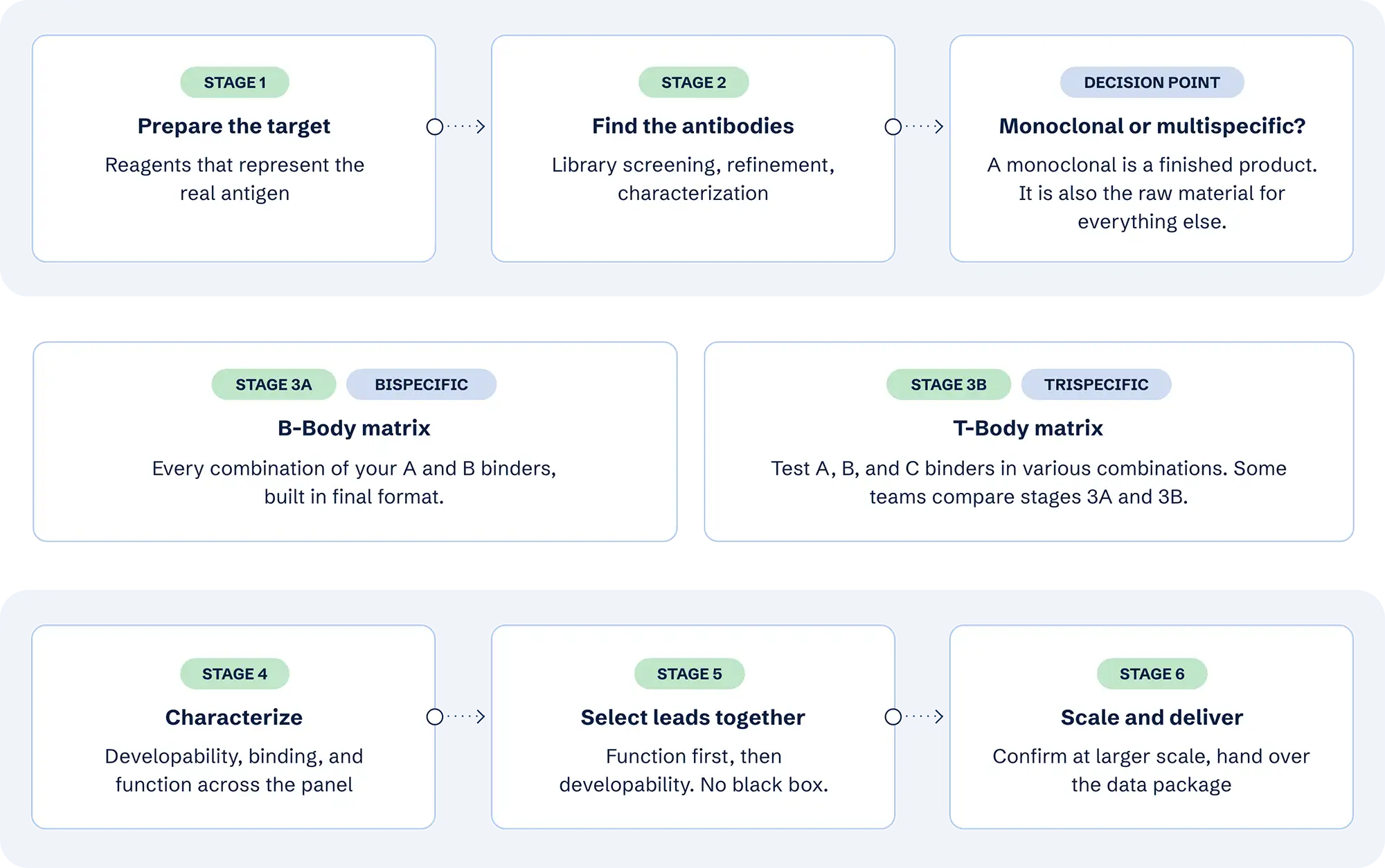
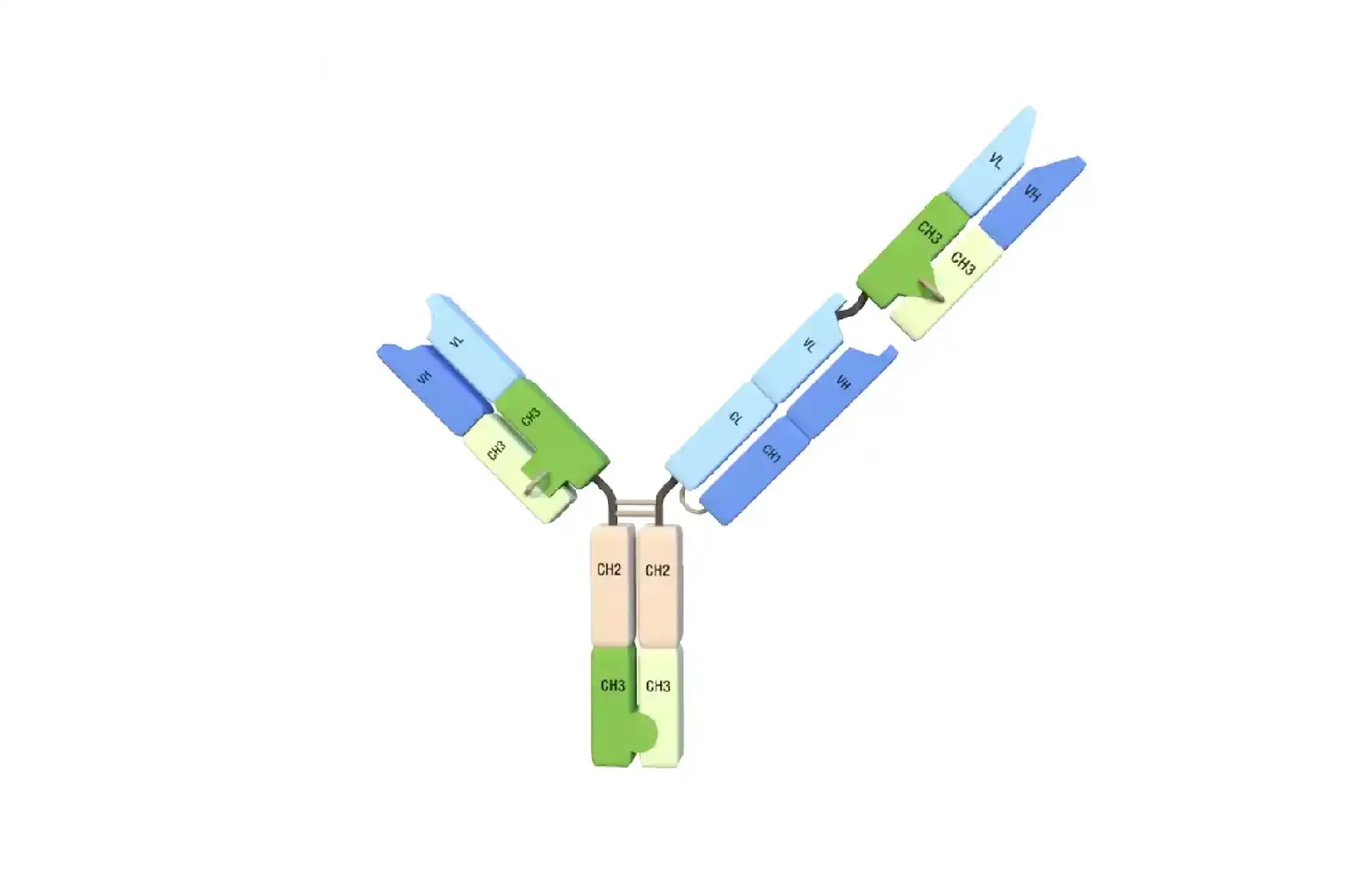
You now have characterized antibodies against each target. The conventional move is to pick a promising pair and hope it behaves. The trouble is that pairing is not additive: two antibodies that each look excellent alone can produce a molecule that expresses poorly, aggregates, or loses the activity you wanted.
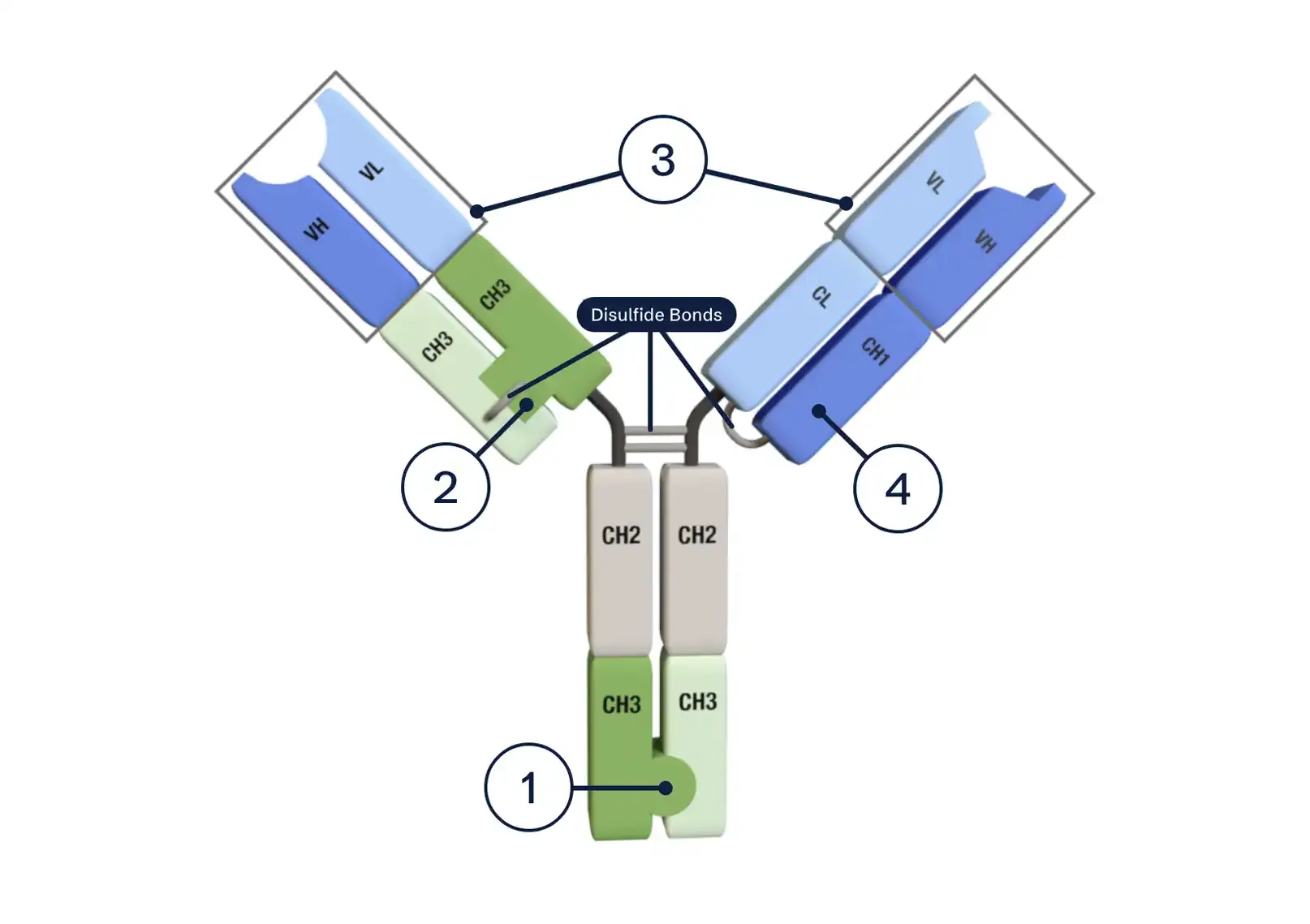
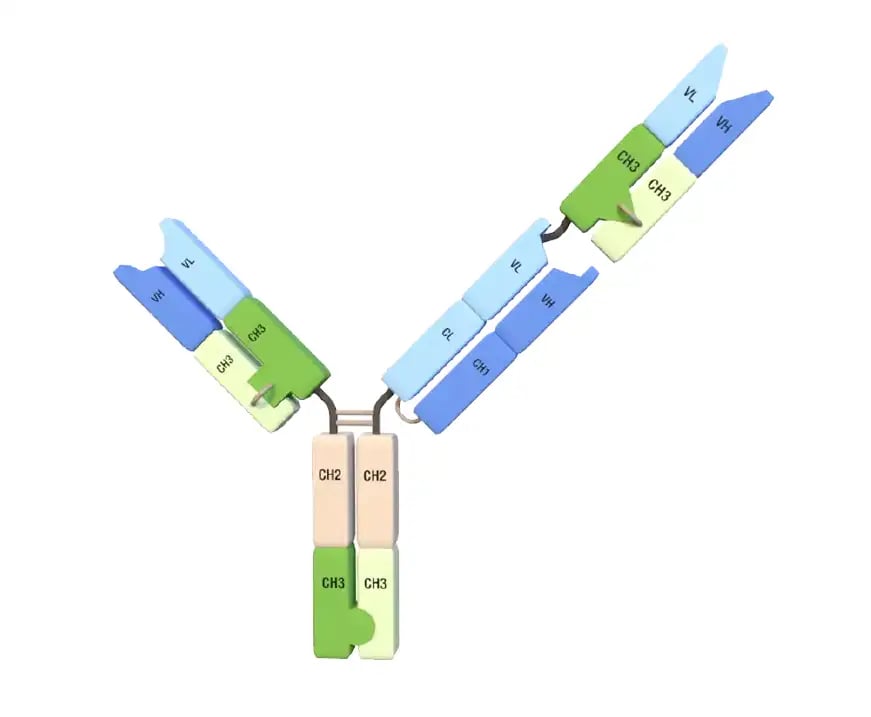
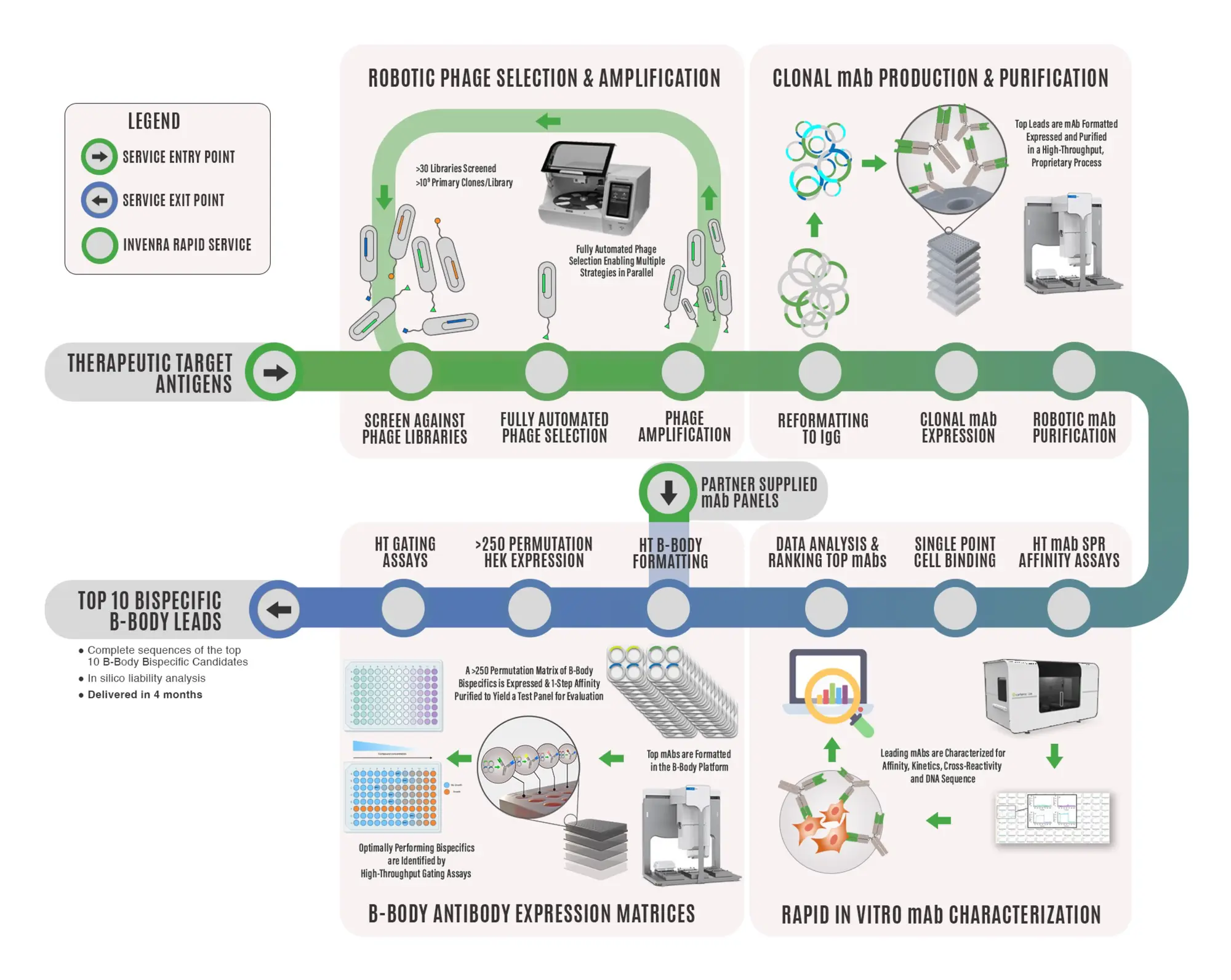
So instead of choosing, we build all combinations. A typical bispecific campaign generates 288+ options, using a 12x12 matrix in two orientations, hundreds of individual molecules, each assembled in its final format. A single anti-CH1 capture purifies each of them, which makes running one method across hundreds of different molecules practical.
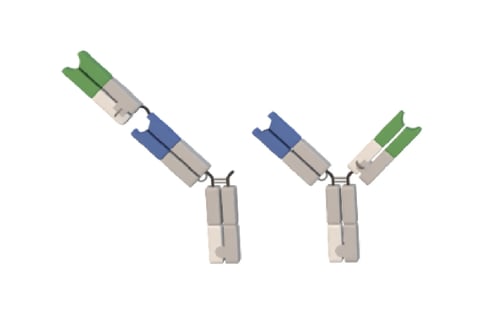
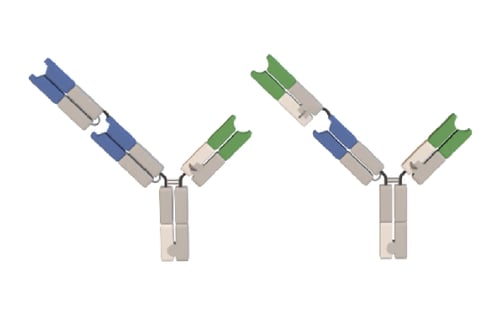
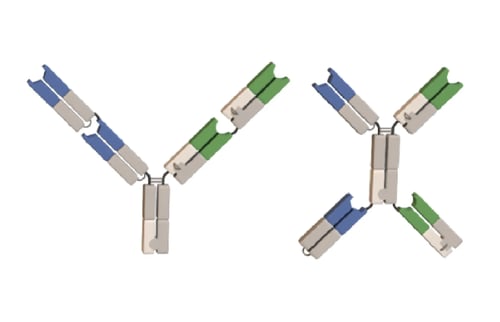
Choosing a multispecific format
The same scaffold can build several shapes. Whether each arm binds once or twice changes how the molecule behaves, and the right choice depends on your biology. Target density, the therapeutic window, and manufacturing all drive format selection. Because the platform tests formats in parallel in their final configuration, you compare them on real data instead of guessing.